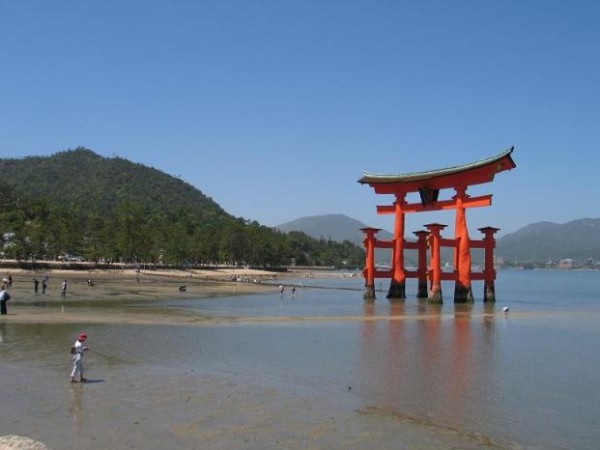
Feature photo and photo above by Abram
JET is a Japanese government program that places English speaking foreigners in public schools throughout Japan, primarily in rural and suburban areas. The purpose of the program encompasses cultural exchange along with language instruction. The department that sponsors JET wants to expose ordinary Japanese citizens to foreigners while also encouraging foreigners to learn first-hand about Japanese culture.
Since actual teaching is only part of the job description, you don’t need teaching experience or certification to qualify for JET. You don’t need to speak any Japanese either. Indeed, for recent college graduates who find themselves with dim job prospects, student loans and a semi-useless liberal arts degree, JET can be an absolute lifesaver.
How To Apply
You must apply for JET in your home country. The first step is a paper application. If you don’t screw that up, you’ll be scheduled for an interview at the nearest Japanese consulate.
Dress as well as you can for the interview. You should look and act like a young Republican. Come prepared to demonstrate three things: emotional stability, an interest in learning about Japan and basic teaching ability. Be sure to have a 5 minute lesson plan ready to deliver.
If all goes well, you’ll get a letter of acceptance followed by a specific assignment to a school system somewhere in Japan.
photo by Abram
Payment and Responsibilities
JET pays well, especially when the yen is strong against the dollar. You’ll make the equivalent of about $35,000 per year. Rent is often free or subsidized, and since most JET placements are in the countryside, your overall cost of living will be quite low.
Job responsibilities vary, but are rarely more demanding than 25 hours of team-taught lessons per week. Your main job is to be a good guest – show up on time, be appreciative and stay out of trouble. For ambitious personalities JET can be boring, but if you just want to enjoy Japan with lots of free time and minimal responsibilities, it’s absolutely perfect. The Japanese are warm, welcoming and generous to foreigners.
JET requires a one-year contractual commitment, with the option to re-contract for one or two additional years. Many JET participants use the money to pay off student loans or travel in other parts of Asia; some fall in love with either Japan or a Japanese person and stay on. Some people can’t take the culture shock, waste the year drinking and then hightail it back home.
JET won’t be the best job you ever have, or a life-long career, but for young people who want to make some money and experience a foreign culture, it’s a great opportunity.
For more information:
About the Author
Related Posts
18 Comments... join the discussion!
-
-
I actually applied for JET twice — and was rejected twice!
↵ -
Man, this seems like a great thing to do. I need to get some turtlenecks and go in for an interview!
↵ -
“Dress as well as you can for the interview. You should look and act like a young Republican.”
True, Tim, but I have a feeling even JET discriminates based on appearance – your chances shoot up considerably if you have blonde hair and blue eyes.
I don’t know, I think I still prefer teaching in eikaiwa.
↵ -
“True, Tim, but I have a feeling even JET discriminates based on appearance – your chances shoot up considerably if you have blonde hair and blue eyes.”
—> That’s actually a question I want to ask. I tried my hand at applying for different TEFL programs in China, Korea and yes, Japan (though not JET) but the largest obstacle I faced was….my face. I’m Asian and everytime I sent in my picture (despite having all the other requirements — US Citizen, Degree [even a graduate degree], teaching experience, and at the time, I was pursuing certification…) I would get rejected, and some made it clear that they preferred those that fit the mold a bit better. I don’t condemn them for this and I get it…but is JET the same way? I know that they are open to accepting Japanese applicants who grew up in the US but are they also open to other non-blueyed folks like myself? Im not asking to be antagonistic…I just want to know so that I can figure out if its a good thing to spend time applying for…
↵ -
I proposed the blue eyes theory in my book (My Mother is a Tractor) and got both a lot of criticism and praise from many different quarters.
Not sure about dressing like a young republican though.
↵ -
I believe, if given the choice between two equally qualified candidates, an employer will choose the one who most looks like what the majority considers to be “foreign”. Maybe I’m wrong.
↵ -
Yep. I think eikaiwas can justify it by claiming they are casting a character in a play, not a teacher.
↵ -
I have friends who have really enjoyed the program and those who couldn’t wait to get out. I guess it depends on what you want to get out of it. I hear they are in the process of restructuring the entire program.
↵ -
Are Eikaiwa the conversation schools that primarily target adult students? What are the pros and cons of Eikaiwa vs JET? I know the big plus of JET is that they pay your return airfares and find you accommodation but I wonder about the working hours/conditions, the fact you are committed for a year, and that you have to fly to and from your home country. My main reason for wanting to work in Japan is to fund travels through Asia so I wonder what would be the best option?
↵ -
JET skims off the cream from the top. Don’t expect to get a job with them unless your grades are excellent.
↵ -
I live in rural Japan, where I’ve founded a private eikaiwa. If I ever meet another foreigner here (although I avoid doing so), it’s pretty much guaranteed that they’re a JET or eikaiwa teacher. Since the JETs come to Japan in a big group of foreigners, I find that most of them create a ‘foreigner bubble’ for themselves, just hanging out with each other all the time, partying at the same expat bar, not progressing in the language any more than they would in their home country. If you see a group of 5 westerners on a train drawing attention to themselves by talking loudly while everyone else on the train is silent (and about the most vulgar topics, or whining about how stupid everything in Japan is, because they’re sure no one around them can understand them), they’re probably JETs. Furthermore, don’t be surprised when these people who are so clueless about their surroundings tell you they’ve been in the country for 2 or 3 years. They’re the same as American military. But I really can’t blame them, because I think the fault lies with the program, which indirectly encourages this non-integration. They offer no means of introducing ALTs to local people their own age or showing them how to pursue their hobbies in their new home with local Japanese. As far as I know, the only connection the program offers with Japanese people is with Japanese coworkers (older people who are often bitter that ALTs earn greater salaries and treated like royalty despite not being ‘real teachers’, not having to work insane overtime, etc.), unmotivated children, and sometimes their parents. It’s no wonder that JETs often end up feeling lonely, stressed, underappreciated, and rejected by the culture, and when you add a healthy dose of normal culture shock on top of that, I think it’s not unusual that they end up either hating the country or retreating to JET partyland, building a psychological wall around themselves and radiating an air of foreignness which makes them even more inapproachable than before, and therefore even more likely to feel isolated and rejected, so it spirals into a vicious downward cycle. Then some of these people go home and write horrible things about their host country online, perpetuating their misunderstandings about the country. I feel sorry for them.
Honestly, as has been outlined in this article, JET has a lot to offer recent grads (I would kill for that kind of salary and job stability in this economy!), but if you’re looking to experience cultural or linguistic immersion, or at least not become like the people I described above, there are a lot of things you will have to take into your own hands. Study about culture shock before you go. Read the complaints of those bitter expats so that you can prepare for the worst (while taking everything you read with a grain of salt). Make a local Japanese friend or two online (on a Japanese forum/community like mixi if you want to speak Japanese there, or on an English forum/community if you don’t mind being milked for English practice) before going, so you have a starting point for making local friends, going to local parties, participating in clubs/sports teams/events (besides the JET Program’s usual offerings of ‘Tea Ceremony for Gullible Foreigners’ or the local ‘JET Ultimate Frisbee Team’ – way to go to the other side of the world to do cheesy things in English you could be doing at home). Maybe before going, you should outline the things you want to be able to do in the country. Anything is possible, but just don’t depend on the program to do it for you.
↵


