The Minority Perspective

07/24/09  Print This Post Print This Post    21 Comments   Popular   Written by Sarah Vazquez
  • Stumble It

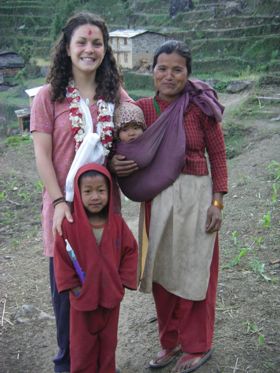
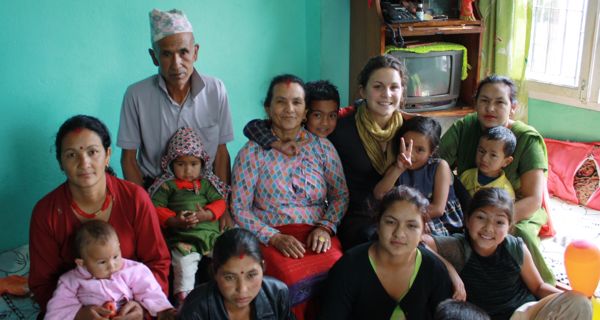
The author and her Nepali host family at home in Kathmandu. All photos courtesy Sarah Vazquez.

Travel reveals many unknown qualities about ourselves, including the reserve of xenophobia that we carry around in our backpacks.

Being a minority is one of the most valuable experiences of travel. The sensitivity and awareness we learn from the minority perspective is important to bettering ourselves as global citizens. This is especially true for citizens of the United States.
Our country’s makeup includes many types of people and heritages. To say that there is one, streamlined “American Identity” is simply impossible.

From the earliest days of Manifest Destiny and mass immigration to our current times of hostile neighbor relationships (inside and outside our borders) and unprecedented presidential elections, the story of the American Minority has always been highly relevant.

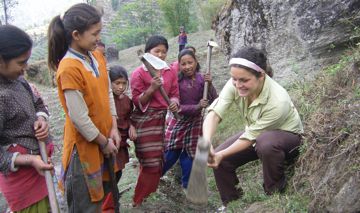
My digging skills under review.

Foreign Americans

By definition, all Americans are travelers and foreigners.

Connecting with the experience of being a foreigner in a global context is really to relate back to the innate immigrant thread that all Americans share.

Amazingly, our common experience as immigrants does not fracture us into categories, regions and races, but rather weaves through our differences and ties us together as one nation.

Whether or not your (great-great-great-great) grandmother’s house was next to Plymouth Rock, or your family just moved to Queens five years ago, we can all learn what it feels like to be “the only one” in a room by adopting the minority perspective and remembering what the experience of immigration was like for our ancestors.

Maybe you are like many Americans and have ancestry rooted beyond the red, white and blue of our nation, but have simply not yet connected with your heritage. Sadly, many efforts towards assimilation and shared identity have meant losing our own distinctive histories and cultural traditions.

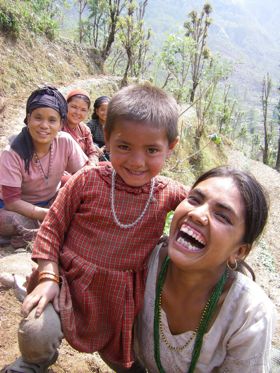
Laughing at me?

Personally, I have experienced much of this internal bi-racial contradiction.

My father is from Mexico, yet for many reasons, I have been raised more or less in a completely “American culture”.

Of course, there is no right or wrong type of heritage, and I’m thankful for the unconditional love and patience my family has given me.

However, in my mind, for better or for worse, “American culture” has sometimes meant a focus on the future at the expense of my heritage.

When I was in Nepal a wave of liberating realizations hit me, subtly and powerfully, over the course of my three months as an oddball foreigner.

I was sometimes, conspicuously, the only female in a room. I was the only one whose skin color didn’t match. I was the only one who couldn’t speak Nepali. I was the only one who couldn’t do the simple task at hand.

In addition, I was often culturally inept. I stepped in the wrong place, I ate the wrong way and I showered poorly.

I was a person I had never been at home in America.

I was a distinct minority.

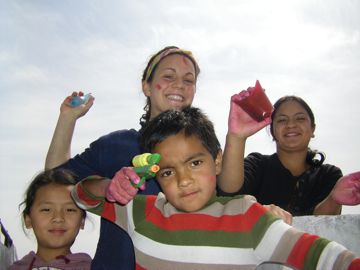
Celebrating Holi, the Festival of Colors.

I tried to take my failures at cultural assimilation lightly.

I quickly got over being afraid of embarrassment, because embarrassment was simply inevitable.

I learned humility, and many of my pre-conceived notions of “what’s proper” soon disappeared as I watched the everyday tasks accomplished in a new way.

I began to lift my head and look around outside of myself. It occurred to me that the Nepali ways were not foreign. The only thing foreign was myself.

Relating to my Father

Perhaps I could now relate to how my own father, along with many other young immigrants, felt in his first years in America.

My father and I had never connected on this type of level before, because we had always focused on our commonalities, namely our recent past together and the future ahead of us.

Although we still don’t talk much about this now, I feel (and hope) that my new-found sensitivity to the minority perspective has spoken louder than my words ever could.

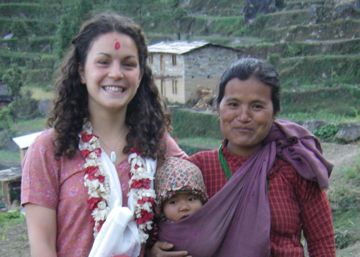
Just like family.

The Lessons of Being Different

Perhaps one of the most useful things I learned in Nepal was how to treat foreignness as a gift.

I began to take solace in the fact that I was learning what it meant to be “the only one” in the room.

Often times over the course of history, Americans have rejected foreignness in favor of conformity. In Nepal, thousands of miles away from home, I learned that everyone is a foreigner somewhere. We are all foreigners because we are all unique.

We all have differences, and so our position of being different turns into a shared experience.

Most Nepali’s seemed to dismiss the idea that I was “wrong” when I misspoke or made a cultural misstep. They just accepted, with enthusiasm, the fact that I was “different.”

I got laughed at. A lot. By many people.

It took me a while to get used to being in the social spotlight all the time, but the humor of my Nepali hosts was not malicious or antagonistic.

My host-family and their friends laughed simply because my differences amused them. It made me happy to see that I could make people smile simply by being myself and by doing some things my own way.

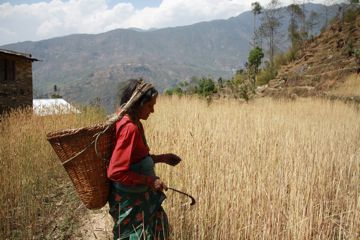
Working in the wheat field.

I treaded these cultural waters with trepidation at first, expecting to be chastised when I stepped incorrectly. Instead, I was respectfully guided in the more culturally acceptable direction.

Perhaps more amazingly, I was never corrected for the sake of retaliation or enforced conformity. Instead, I was always corrected so that I could become a better Nepali and improve my own experience.

Strength in Difference

I returned to America with a strong belief in the importance of respect and understanding within the global community. We must all be responsible, compassionate global neighbors.

But I also returned with a vision of what it means to be an American today. Our nation’s backbone lies in our shared experience of the minority perspective. Our differences help make us strong.

What do you think about the minority perspective?

Please join the conversation by leaving a comment below.


  • Stumble It

About the Author

Matador ID: sarah-vazquez

Sarah Vazquez is an alumna of the Himalayan Studies semester offered by Where There Be Dragons. She lives in California and will attend Georgetown University in the fall.

Related Posts

21 Comments... join the discussion!

  • Hal replied on July 24, 2009

    “I learned that everyone is a foreigner somewhere.”

    Great line. I’ve learned a lot about being a foreigner over the last few years, and it’s given me a completely different perspective on “foreigners” in the U.S., be they tourists or newly arrived immigrants. Particularly, I’ve noticed how many Americans get impatient with those whose English isn’t as good as theirs. After seeing my many gaffes in Korean and Spanish tolerated with nothing but patience and kindness, I’ll never make that mistake.

    (Report comment)

    ↵ Reply
    • Tim Patterson replied to Hal on July 24, 2009

      Good point, Hal. I cringe when I compare a typically cold and distrustful American welcome of foreigners with the empathy, patience and good-humor that often greets me overseas.

      Americans can be great hosts, don’t get me wrong, but we don’t have a good reputation for patience or kindness when strangers who can’t speak English approach us.

      (Report comment)

      ↵ Reply
      • sarah vazquez replied to Tim Patterson on July 25, 2009

        It is so demeaning to treat someone like they are not intelligent because they can’t speak the language. I have so much respect for someone learning a new language!!

        And the fear that I’ve picked up on when returning home is astounding. As is the lack of concern that is so often shown for our neighbors.

        Thanks for the comment Tim!

        (Report comment)

        ↵ Reply
    • sarah vazquez replied to Hal on July 25, 2009

      Hi Hal,

      Yes, patience is something that I too find myself forgetting when I return home. It’s obvious that when abroad a traveler can open up his/her sense of adventure but I find that it’s easier to open up my heart as well. Along with being more willing to try spicy food (despite that never, ever going over well), I am also much much more patient. When I return home, the hot food goes away and sometimes my patience does as well. It’s something to keep an eye on, for sure.

      Thank you for your comment!

      (Report comment)

      ↵ Reply
  • Liv replied on July 24, 2009

    Excellent article. I’d always appreciated what my parents went through when the immigrated to the United States, but I couldn’t relate to them until I was an immigrant. I lived in Japan for 2 years and through always being an oddball and especially my difficulties in learning the language, I finally began to realize what they had gone through in order to create their new lives. A devastating and marvelous experience.

    (Report comment)

    ↵ Reply
    • Tim Patterson replied to Liv on July 24, 2009

      I love your last line, Liv: “A devastating and marvelous experience. ” Exactly.

      (Report comment)

      ↵ Reply
    • sarah vazquez replied to Liv on July 25, 2009

      Hi Liv,

      Yes, absolutely! The hardest thing for me to accept was that no matter how assimilated I became, I would never be a full native. I could dress the part, cook the part (try to), speak the part (try really hard to), but I was always still a foreigner. I hope no such sense of despair plagues any of our new citizens, but I’m afraid that might not be true.

      However in Nepal I was also a guest and treated with respect. This attitude taught me how to treat foreignness properly and with hospitality. “Do it up like a Nepali!’

      Thanks for your comment!

      (Report comment)

      ↵ Reply
  • Terri replied on July 24, 2009

    It is interesting that so often the focus on minorities in the US is cast in a negative light – and that we are all getting a reeducation in the opportunities afforded, at least to some Americans, through Sonia Sotomayor’s story. Perhaps the larger lesson is one of acceptance of differences as a means towards building bridges of understanding, be it in the US minority context or as a traveler to foreign lands!

    (Report comment)

    ↵ Reply
    • sarah vazquez replied to Terri on July 25, 2009

      Yes, totally, Terri.

      I personally really admire people like Sotomayor and Obama for being open and comfortable enough to share their stories (both being pretty distinct). I really do believe that it is the vulnerability that comes from sharing our lives that will open up the respectful, healthy dialogue we need my generation to be having right now.

      Thanks for the comment!

      (Report comment)

      ↵ Reply
  • Michelle replied on July 24, 2009

    I love your idea of treating foreignness as a gift. It’s so hard not to be self-conscious at first, but when people are welcoming and helpful, it can be a great experience.

    Thanks for sharing!

    (Report comment)

    ↵ Reply
    • sarah vazquez replied to Michelle on July 25, 2009

      Often times I found straight forward honesty the best way respond to my embarssement. On occaision if I simply asked

      “Why are you laughing at me.”

      I would get an answer like,

      “Because you didn’t boil the tea all the way.” (big faux pas)

      Then it was very easy to see why I was being laughed at.

      Thanks for your comment!

      (Report comment)

      ↵ Reply
    • sarah vazquez replied to Michelle on July 25, 2009

      Hi Michelle,

      Here is an essay that I really like. “Why We Travel” by Pico Iyer.
      http://www.cmi-gear.com/tim/travels/chapter12-travel.asp

      This was given to me by my leaders of my trip (with an experiential education travel program, Where There Be Dragons). It speaks about how foreignness is also a power.

      Happy travels,
      Sarah

      (Report comment)

      ↵ Reply
  • tom gates replied on July 25, 2009

    A fantastic piece! I read this through twice.

    (Report comment)

    ↵ Reply
  • Alex Kendall replied on July 27, 2009

    What a beautiful piece! Thanks for sharing your thoughts.

    (Report comment)

    ↵ Reply
  • Sweta replied on July 28, 2009

    Sending your way tons of love bahini!

    (Report comment)

    ↵ Reply
  • Shannon replied on August 2, 2009

    Sarah. . .beautiful! Thank you for sharing bahini. It made my day reading your thoughts.. . EKDAM RAMRO!!!! love to you xoxoxo

    (Report comment)

    ↵ Reply
  • Gene replied on August 16, 2009

    Thank you these essays, bahini. I’ve visited Nepal several times and never tried to learn any Nepali because it seemed so difficult and I’m so bad at languages. You’ve inspired me to try harder next time, even it’s only a few phrases.

    (Report comment)

    ↵ Reply
  • Helen Rortvedt replied on August 18, 2009

    Beautiful, Sarah. Thank you so much for sharing. It is an honor to be a part of a community of learners, journeyers and “foreigners” like this.

    (Report comment)

    ↵ Reply
  • Hannah replied on August 18, 2009

    What a gorgeous essay Sarah. You put my feelings about travel into words with such poetry. Thanks you for sharing and I look forward to hearing of your future travels. Abrazos.
    Hannah

    (Report comment)

    ↵ Reply
  • Allana replied on August 20, 2009

    Hey Sarah! Excellent article, I’m impressed with your insight and bravery. I’ve passed this on to my former Himalaya students. Thank you for inspiring!

    (Report comment)

    ↵ Reply

Leave a Comment

Jump To Category:


Explore the Community


Latest Community Blogs

  • Ok...I know I am a foodie and have travelled quite a bit and been to lot many places but the one city which is always an...
    » posted on 18 November 2009
  • Some 70 per cent of Vietnam’s population is engaged in agriculture, which uses over 20 per cent of the country’s are...
    » posted on 18 November 2009
  • It's true!  You can 'hire' a rental car for free in New Zealand.  Auckland in the north of the North Isla...
    » posted on 18 November 2009

Popular Stories on Matador

The 20 Craziest Party Hostels Around the World

Our man Matt searches high and low, enduring sleepless ... 

Hostel Sex: A Practical Guide For Backpackers

Getting it wherever a backpacker can...... 

Hamburger Pornography: Tasteful, Beefy Centerfolds And Their Buns

As founder of Burger Conquest (dedicated to the gloriou... 

10 Traveler's Tips For Rocking A Nudist Beach

Travelers tend to enjoy ultimate freedom on the road, t... 

12 Personal Travel Websites That Will Make You Quit Your Day Job

... 

Drunk and Driving On Berlin’s Beer Bike

Cars nervously skirt by the slowly moving vehicle, tour... 


Focus


Editor Blogs