Mercer’s Best Places to Live in 2009: Quality of Life?

04/30/09  Print This Post Print This Post    13 Comments   Popular   Written by Sarah Menkedick
  • Stumble It

I give Mercer’s report on the Best Places to Live in 2009 a massive yawn.

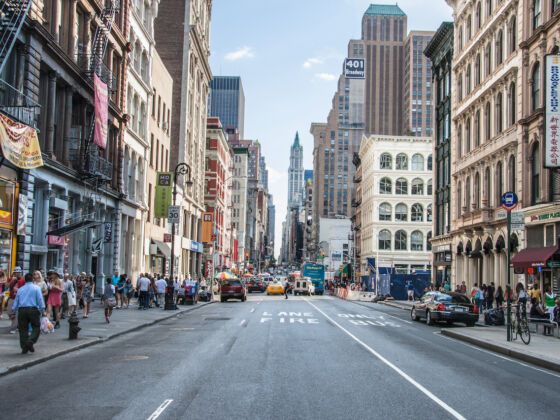
Photo: mbell1975

Business Week features photos of ordered, neat, European urban-scapes: stoic cathedrals coupled with familiar brand names, skyscrapers, all the tidiness of money and “civilization.” Buildings are clean and quaintly historic, skies are blue, rivers are strategically running past postcard-friendly architecture.

Bravo. And?

The Mercer reports essentially calculate the “quality of life” in cities where companies are thinking of sending their workers. New York is the base city for all the reports–it’s given an index score of 100 and all other cities are judged around that.

The factors considered in Mercer rankings include:

Infrastructure: electricity, water, postal services, transportation, etc…

Cost/Quality of Living: how extravagant of a lifestyle can you get on a decent budget?

Accessibility: How close is the nearest international airport? How frequent/reasonably priced are flights?

Crime rates and economic and political stability: Are you going to have to worry about getting kicked out by a coup? Pick-pocketed on the subway?

There’s nothing wrong with these calculations, and they certainly do pick out safe, highly organized and developed cities.

…but….and in this but lies, in my opinion, everything fantastic about travel…

These are places where you can get all the luxuries of the modern corporate lifestyle for relatively cheap, where it pays the most to have bought into this whole vision of globalization that judges quality of life based more on Starbucks and tidiness than on…human connections? Bustling communities? Diversity?

Call me highly impractical and romantic, but I think quality of life should be a helluva lot more than this. For as great as these cities may be–and some of them are amazing and surely wonderful places to live–I think these criteria mostly reflect an expat culture that demands imported French wines and fully furnished apartments at a steal in whatever outpost the company has most recently invaded.

And I find that, besides being somewhat sad, incredibly boring.

My criteria for the best places to live in 2009 would be:

1) A thriving coffee culture.

2) People who still love and care about and grow their own food.

3) Public places that are alive and teeming with activity. People who meet in these places.

4) A certain degree of unpredictability– non-conformity and non-uniformity. Can you find noodle shops or clandestine Nigerian record stores somewhere? Might you stumble across something unplanned, unprecedented, spontaneous, unruly?

I could go on and on…but I’m more interested in seeing what you all would use to judge “quality of life” in a place. If you had to rate the best/worst places to live in 2009, what would your criteria be?


  • Stumble It

About the Author

Matador ID: SarahMenkedick

Matador Contributing Editor Sarah Menkedick is a freelance writer based in Oaxaca, Mexico. Her writing has appeared in print and online publications, including Literary Traveler, Abroad View magazine, and National Geographic Glimpse. She has traveled, lived, and taught on five continents, and is constantly in pursuit of spicy food, dark beer, and new places to run. Check out her website of photography and creative nonfiction inspired by travel.

13 Comments... join the discussion!

  • Carlo Alcos replied on April 30, 2009

    Being from Vancouver, I guess I am pretty proud it ranks 4th…although, I totally get what you’re saying…and reports like this do nothing to change people’s minds about what is actually important in life.

    Melbourne meets your criteria – well, maybe not so much #2, but no big city does that…although I am sure around the city there’s a fair share. Coffee culture coming out the yin yang here. Bustling public spaces – check. While it may not have the unpredictability that you probably have in mind, there are surprises everywhere – like an obscure stage in the back of a record shop with live musicians.

    My criteria changes all the time, depending on my mood. Sometimes I hate the city and feel like being a hermit, but sometimes I need the busy-ness and the variety of things to do.

    Side note: the population listed for Vancouver (2.2 mil) is misleading. That’s the GVRD which encompasses all the nearby suburbs. The city proper has more like 500,000.

    (Report comment)

    ↵ Reply
  • Eva replied on April 30, 2009

    First off, can I just say that it blows my mind that my dear old stodgy Ottawa is in 16th, tied with cool-kid Berlin?! Which probably, in a way, illustrates your point, Sarah.

    That being said, I do think your take on this (admittedly predictable) list is a tad cynical. I don’t think a desire to experience life in the capitals of old Europe reflects a belief in “quality of life based more on Starbucks and tidiness” than on a desire for an actual, thriving community, or, necessarily, “an expat culture that demands imported French wines and fully furnished apartments at a steal in whatever outpost the company has most recently invaded.” (For one thing, I’m puzzled by Mercer’s claim that these cities are affordable. Geneva? Zurich? Even Vancouver – not so much. But that’s a tangent.)

    Professional expats aren’t corporatized automatons. They are, often, not people who would otherwise travel extensively or live abroad for long periods of time — they may not be in the game for the travel. They’re probably afraid of the unknown, and of the isolation and frustrations that we all know can result from a long stint in a foreign place. I think most expats would be drawn to places like Geneva or Auckland precisely because they are *seeking* community and connections — and believe, rightly or wrongly (or a bit of both) that they won’t be able to find those things in Buenos Aires or Ho Chi Minh City.

    I don’t think it’s about Starbucks (heck, there’s a chain coffee shop on every corner in Kuala Lumpur) so much as it is about comfort. So we can ding them for lacking a spirit of adventure, sure, but I think there’s more at work here than a culture of shallow commercialism.

    (Report comment)

    ↵ Reply
  • Eva replied on April 30, 2009

    Oh, and I almost forgot!

    My criteria would involve:

    a) not too much of a language barrier (not to say I wouldn’t go somewhere where I don’t speak the language — but I wouldn’t go *until* I had acquired at least a basic working command of the language, and then aim to improve from there)

    b) diverse/affordable dining options; good markets or grocery stores

    c) the ability to be outdoors, not necessarily wilderness-y outdoors (though that’s good too) but the availability of outdoor public spaces

    d) access to movies, new and old

    (Report comment)

    ↵ Reply
  • Tim Patterson replied on April 30, 2009

    Right on, Sarah. Let’s draw up our own list! My criteria – not too expensive, fairly safe but not stodgy, good access to the wild, thriving youth culture…oh, and I prefer towns with less than 2,000 people. But maybe that last one is a stretch.

    (Report comment)

    ↵ Reply
  • Caitlin replied on April 30, 2009

    Interesting article. I too agree with your criteria, especially #3 and #4.

    I have lived in Ottawa and Toronto. Though I’m relatively happy here in Ottawa for the time being because of friends I have, it does lack the stuff that makes me love a city – diversity, unpredictability, public spaces and public life. Toronto fits that description a lot more – it has vibrant, diverse neighborhoods and people really do live their life in public a lot more.

    Anyways, if those 30 cities (all in the “North”) are where the best quality of life is, how come I feel so much happier when I’m in a vibrant and chaotic city in Africa or Latin America?

    (Report comment)

    ↵ Reply
  • Ryukyu Mike replied on May 1, 2009

    Iced coffee machines on every street, beaches everywhere; jungles and mountains, too ! Rent a house for $350 a month and the landlord delivers fresh veges and flowers, he grows, several times a week. But the bathtubs are small….

    (Report comment)

    ↵ Reply
  • Tim Patterson replied on May 1, 2009

    Careful Mike, you might find Sarah on your doorstep if you keep talking about those iced coffee machines! Any ferries from Nagoya to Naha?

    (Report comment)

    ↵ Reply
  • admin replied on May 1, 2009

    Eva–

    You make a great point, but I think I may have given the impression that I was criticizing expats in general when I was actually trying to take aim at the Mercer ratings and the way they judge quality of life. I was trying to explain that the Mercer ratings encourage a way of judging place based on corporate, capitalist criteria, and based on a vision of quality of life that is very much in keeping with this sort of corporate ethic. They base all of the ratings off of New York – a major center of U.S consumer culture.

    I see the point of the Mercer ratings, and I understand that they target a particular audience, but I think that the kind of goals they represent – livable cities which all conform to this greater corporate vision of quality life – are somewhat sad and boring.

    As for expat culture– I definitely didn’t do a good enough job of clarifying that I don’t think all expats, or all expats that live in these cities, or all expats that follow the Mercer ratings are “corporatized automatons.” I’m an expat and many of my closest friends are expats, so that’d be hypocritical right from the start. When I said “an expat culture that demands imported French wines…” etc, I didn’t mean the expat culture overall, but rather a particular segment of that culture that searches to implant whatever definition of home they have on the place they’ve moved.

    And while I see your point that many expats are seeking out community, I think there are just as many expats who seek to create little bubbles in the places they live, shopping in foreign grocery stores, going out to restaurants with familiar food with other foreigners, etc. I’m not sure these people are fearful of being overseas, nor do I think they’re looking for a local community. I’ve seen this in San Miguel de Allende, Mexico–the most spectacular example of expats living in gated communities totally isolated from the locals and shopping at foreign supermarkets. It’s there in China, too– there is a really pronounced expat neighborhood and there are plenty of people that never leave it and spend their time complaining about these Chinese realities that seem to creep into their expat world (poverty, people sleeping in the streets, crime, different ways of talking/negotiating, spitting, etc.) Don’t get me wrong– I’m not against complaining in a particular place (see my comments on this article: http://thetravelersnotebook.com/how-to/how-to-avoid-being-an-ugly-american-tourist/) but I think shutting oneself off from a place and expecting it to conform to these sort of internationalized standards of “quality of life” is rather depressing.

    Thanks for keeping me on my toes, Eva!

    (Report comment)

    ↵ Reply
  • Ryukyu Mike replied on May 2, 2009

    Tim,
    Have to check that ferry thing out for you; I’m headed to the Naha Dragon Boat races in a few minutes.
    What keeps me from claiming I’m an EXPERT on Okinawa is I’ve created my own little expat bubble and probably don’t have half the information and internatiolan traveler needs to know.
    Since joining the Matador gang, I’ve decided I need to research a few things before I start lying and calling myself an expert !
    Get back to you, shortly.

    (Report comment)

    ↵ Reply
  • JB replied on May 18, 2009

    http://www.artdaily.org/index.asp?int_sec=2&int_new=30910

    Evidence this recent article that talks about a major livability component in the top cities that is not measured by the Mercer survey. There are several European cities in the top 10 that would never survive my “insularity” index.

    (Report comment)

    ↵ Reply
  • Carla replied on July 1, 2009

    Because you are a tourist there. Living in a city and visiting a city are two different things. Safety are the utmost concern for most people and most major Latin and African cities in particular are considered the most dangerous places to live and travel to. Sorry but beheadings, kidnappings and being robbed are not my idea of vacation adventures either.

    (Report comment)

    ↵ Reply
  • Carla replied on July 1, 2009

    Well clean, safe, lots of great Renaissance architecture, great food, polite and friendly people in a family friendly environment are what my husband and I look for so we always end up in Europe. And if you are going to live somewhere, infrastructure is certainly a high priority especially for business people. Can’t live somewhere without the Internet.

    (Report comment)

    ↵ Reply
  • William replied on October 25, 2009

    Interesting post.
    My criteria would be Transportation options.
    I have never been to Europe/Canada/Australia, but I find interesting I do not see major Asian capitals in here (Hong Kong, Seoul, Tokyo).

    (Report comment)

    ↵ Reply

Leave a Comment

Jump To Category:


Explore the Community


Latest Community Blogs


Popular Stories on Matador

The 20 Craziest Party Hostels Around the World

Our man Matt searches high and low, enduring sleepless ... 

Hostel Sex: A Practical Guide For Backpackers

Getting it wherever a backpacker can...... 

Hamburger Pornography: Tasteful, Beefy Centerfolds And Their Buns

As founder of Burger Conquest (dedicated to the gloriou... 

10 Traveler's Tips For Rocking A Nudist Beach

Travelers tend to enjoy ultimate freedom on the road, t... 

12 Personal Travel Websites That Will Make You Quit Your Day Job

... 

Drunk and Driving On Berlin’s Beer Bike

Cars nervously skirt by the slowly moving vehicle, tour... 


Focus


Editor Blogs