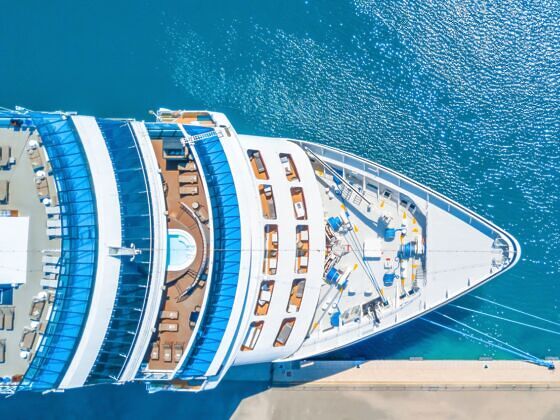
Feature Photo: nick hobgood Photo: roblnh00d
The fact that Royal Caribbean Cruise Lines is still docking luxury cruise ships at Haiti’s privatized beaches is grotesque; but sadly, taking a wider view of international tourism, it’s not shocking. The type of harsh unconcern for the circumstances of local people isn’t an aberrance from the tourism norm, but rather the norm itself.
Privatized resorts all over the Caribbean, particularly in Cuba but also in Mexico, the Dominican Republic, and a host of other countries, often have little interest in the fate of the locals they bar from their premises with gates and armed guards.
Yes, you’ll hear the familiar rhetoric that Royal Caribbean has spouted in response to outrage over the decision to continue stopping in at Labadee beach in Haiti, where passengers tipple cocktails and jet ski on cordoned off beaches while Haitians endure mounting horror in Port-au-Prince. The cruise ships and the resort are helping the local economy; the resort at Labadee beach employs and supports more than 500 Haitians.
Photo: roblnh00d
Never mind that there have been major protests against the privatization of the beach and the fact that Haitians not serving a cocktail to a cruise goer are banned from entering; never mind that the vast majority of Haitians receive almost no economic benefit from Labadee other than the hope that they’ll someday be among the select few picked from the mass of cheap labor to work at the resort, never mind that a chunk of their natural wealth has been partitioned off for frolicking tourists. Never mind that these resorts follow the same model of privatization that impoverished the country in the last two centuries.
I know that the job situation in Haiti is desperate; according to Harper’s, the ratio of people in Haiti to the number of permanent full-time jobs there is 80:1. But is appropriating idyllic sections of coast for the exclusive use of wealthy tourists really the ideal way to develop job growth there or anywhere?
Above and beyond this, what sort of message is Royal Caribbean sending to the tourism industry when it says that docking a ship in Haiti following an unspeakable disaster, allowing passengers to fly down zip lines and soak up the sun on private beaches while thousands of people are dying, is OK?
It’s a message that says, “you know what, the ‘locals’ may be suffering – may be dying, may be screaming for their loved ones amidst piles of rubble – but that’s not really of our concern, because as tourists, we’re not a part of it. We drop off some packaged food and move on.”
In a nutshell, it’s saying tourism cuts off a little, beautiful, sanitized part of an impoverished country, cleans it up, and places armed security guards around it to make sure the locals don’t get in (The Guardian noted that people booked on ships scheduled to stop at Labadee are worried about desperate locals climbing fences in search of food).
Beyond the incredulous decision of the cruise line to encourage tourists to “cut loose” in Haiti at such a moment is the wider implication the decision holds. If the tourism industry – specifically, the cruise industry and the luxury resorts it relies on – can embrace such a stark and obscene dichotomy at a time like this, what does the future hold?
About the Author
Related Posts
12 Comments... join the discussion!
-
-
Actions like that are why everyone uses tourist as a dirty word, and that is so sad. But what makes this sad situation even more unfortunate is the precedent it sets for the future.
↵ -
I don’t think you can blame just cruise industry about this. What about people you booked to these cruises and care only about that somebody can take their food:
“The Guardian noted that people booked on ships scheduled to stop at Labadee are worried about desperate locals climbing fences in search of food”↵ -
Yes, thank you Sarah for exposing this obscenity.
↵ -
Well I have thought about this one and initially I thought it was terrible and it still is a bad PR move for the cruise industry in many ways, but I may have to take the other side on this. I don’t how it would help Haiti for the ship to go elsewhere, but it does help those 500 workers and thus the local economy to a certain extent.
If people are still going to take vacations then what is the difference between stopping in Puerto Rico or a part of Haiti unaffected by the earthquake? Should all cruise ships pause their service in the caribbean and help out the victims? I think that would be great personally, but if the cruises are going to continue then I think Haiti is just as good, if not a better place for them to stop than elsewhere.
After the Tsunami, Thai’s were begging for tourists to return, and in visiting the area not two years later it was very hard to tell a disaster like that had occurred because the tourism industry helped build things up so quickly. I agree that it seems wrong and insensitive, but unless the ship was going to be serving some humanitarian purpose and was taken away for tourists, then its better that they stopped in Haiti as opposed to causing more economic harm to those Haitians who are able and willing to work.
As far as the private beach situation, at some level, the local or national government had to sign off on that. So good or bad its an issue for domestic politics. Having myself grown up in a community dominated by a luxury resort with a private beach I understand the dilemma. I have experienced being thrown out by security many times(it was a great beach) but the resort also employed many of my friend’s parents and was a huge part of our local economy.
All that said, I do agree with criticism of the cruise ship industry and the types of ’shore’ experiences they create and perhaps in the long run people will take closer looks at the effects of that type of tourism.
↵ -
Disgusting. The absolute worst in human nature.
There may be a time to bring money into the local economy via tourism (though hopefully without exploiting the natives as has so often been the case).
But even if these cruise lines do contribute money, it is a drop int he bucket compared to what they have made over the years exploiting the locals with their neo-colonialist tours.
I am sure that the tourists in those ships would not be pleased if “pleasure-liners,” which are my idea of pure hell, often being often populated by burmuda-shorts-wearing-chicken-legged-drones, were docked outside of an area of California if and when the “big one” hits.
↵ -
How exactly would the cruise ships going elsewhere help the people of Haiti? Even given the fact that the cruise lines underpay Hatian workers to a large extent, opportunity for employment (much less gainful employment) is an extreme rarity in the country and one that I am sure the workers at these luxury resorts are grateful for. If tourism stopped entirely during this crisis the only thing that would happen is a rise in unemployment and possibly a large shift towards the even more exploitative textile industry that is slowly taking over what remains of Haiti’s economy.
It is very easy to be outraged at this from 500 miles away, and on its face it does seem insensitive and inappropriate, but the people of Haiti have been left with no alternatives by centuries of mismanagement and outside interference in their affairs. For the time being, at least, tourism is the best (and perhaps only) hope for the development of Haiti into some semblance of prosperity. To deny them that chance at this time, simply put, would be even more disastrous in the long-term than this earthquake has been in the short.↵ -
I’m torn on this one. Royal Caribbean changing its route would definitely affect those 500-odd Haitians who are employed at Labadee in a negative way. It seems the root of the problem – the grotesqueness of this situation – goes a lot deeper and started a lot earlier than the recent earthquake.
↵ -
This is a very interesting read, but the fact remains that Haitians need to work. Any issues you have with ships should be with the ships and how they operate in general, not so much this one incident. I worked onboard for 3 years and feel that this call in Haiti is the least of what cruise lines should be criticized for.
Haitians need the work which ships provide and every bit helps. Perhaps if over the years more ships had port calls in Haiti then they would have had the infrastructure built up, thus minimizing damage.
I completely agree that after the Tsunami, the Thais had the right attitude. They embraced the assets they had(Tourism) and used it to rebuild. Haiti should do the same even if it does include a vessel that the readers of matador don’t approve of.
↵ -
Here here. I promise you that the cruise line will loose money because they are continuing to make stops on the island, as people will not want to lay out on a beach that is so close to so many dying people. I support the cruise line in this decision.
↵


