Love and Expat Marriage: Finding Identity as a Trailing Spouse

07/13/10  Print This Post Print This Post    28 Comments   Popular   Written by Mary Richardson
    Share

All photos: Mary Richardson

After only 6 months of marriage, my husband received an exciting job offer in Japan. Soon after, we moved from California across the world.

At the time, I was thrilled by the opportunity. I had lived abroad in several countries as a single person, and this move presented a brand new experience. We’d be braving the world as a team.

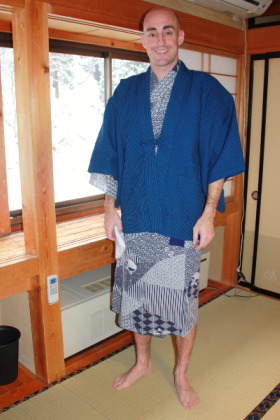
I imagined that we’d take language classes and eat exotic foods. We’d entertain all our Japanese friends. We’d travel and have adventures to tell our children someday.

What I never imagined was my new role as the “trailing spouse.” The term refers to a person who follows his or her partner to another place, often a foreign country. Taking on that role was harder than I ever thought.

After two years in Japan, I’ve revised many expectations about expat marriage. While I certainly would never trade this time, I have been challenged in unexpected ways.

If you are planning a move abroad as an expat couple, you’ve probably already considered the basic difficulties of culture shock and homesickness. But for the trailing spouse, there are other less obvious issues to consider.

Dependence

The first year, I felt like I was stranded on a deserted island with my husband, and I don’t mean in a romantic movie kind of way.

Living far away from home, it’s natural to turn to each other to fulfill a variety of needs. It’s also easy to underestimate how long it takes to make friends and feel comfortable. In our case, we felt limited by Japanese cultural and language barriers for some time, which restricted our social outlets. As a result, we spent too much time in our own insulated cocoon.

But my husband had the simple advantage of going to a job everyday, offering him benefits I didn’t share. His days had structure, he made friends at work, and he maintained his professional identity.

In my case, I was financially, socially, and emotionally reliant on him.

This dependence was surprising given that I had lived abroad before. I was certainly no stranger to culture shock and lifestyle differences. I had expected them, but I hadn’t considered the difficulty of adjusting to a new country as an “accessory” without my own purpose for living there.

Loss of Job Identity

A 2008 study conducted by the Permits Foundation indicated that only 35% of surveyed trailing spouses work during their expatriation despite having prior careers. What’s more, the lack of satisfying job opportunity often affects self-esteem.

In my own case, this rang true. I desperately missed my former identity. At home, I had taught English classes at a university. I enjoyed the academic interaction with students and colleagues. I had been self-sufficient and proud of my work accomplishments.

I also missed earning my own money. I assumed that finding a job would be easy, as there seemed to be no shortage of ESL teacher positions. The reality, however, was that there were few jobs that matched my experience, education, and salary expectations. I had worked my way up the ropes in my former life, and in Japan it felt like I was starting from scratch.

Too Much Time

Before moving, I fantasized about how I would spend my free time. However, I soon discovered that “transition” time when you’re unemployed is not exactly a vacation. Rather than liberating, it’s stressful and lonely.

I had too much time to dwell on frustrations. Many days lacked focus. I remember a tense period that first year when my husband would come home from work wanting to talk about events of his day. When he asked me about mine, I resentfully felt like I had nothing to tell him.

Eventually, I did find satisfying outlets for my time, but it took longer than expected.

Different Lifestyle Approaches

Finally, to my surprise, my husband and I discovered that we didn’t want to experience life abroad in the same way.

Of course, we’ve both enjoyed the food, the sights, and travel, but our desire to “integrate” has differed fundamentally. I’ve taken language classes and karate lessons, made Japanese friends, and tried to connect in a meaningful way.

My husband hasn’t shown the same interest. Part of the reason is that his work schedule doesn’t offer the same time. But he also admitted he’s less motivated to put himself in those situations. He’s content socializing with other expats and being removed from the local experience. He’s less willing to go off the usual path.

As a result, I have experienced much of Japan on my own, and not as the harmonious team that I imagined.

In one sense, I’ve developed a great deal of confidence, but I’m also the one in the marriage who does all the “engaging” with the Japanese world. I order the food in restaurants, make the phone calls, and deal with the repairmen. I’ve taken on dealing with most of nitty-gritty details about living abroad.

Self-reinvention

Despite the stresses, the greatest positive aspect of being a trailing spouse is that we are given the chance for self-enrichment and reinvention.

If you’ve ever dreamed of escaping your current job and pursuing a different career path, there are certainly means to do that abroad. I know expat spouses who are getting Masters degrees online and honing skills through volunteering and part-time job opportunities. I know several trailing spouses who turned their photography and personal blog hobbies into viable income.

In my case, I have developed Japanese language and cooking skills. I’ve made new friends with local women and other expats. I’ve taken advantage of traveling and learning about the history and culture of Asia. Finally, I’ve embarked on a new path of being a tour guide and freelance writer.

Tips for surviving the first year as a trailing spouse:

1.Be realistic about how long it takes to feel comfortable in a foreign country. Don’t take things too seriously for at least 6 months.

2.Learn the local transportation system as soon as possible so that you’re not stuck at home alone while your spouse is working.

3. Join an expat women’s (or men’s) group to meet others with shared experiences

4. Join a local women’s group to make friends with area insiders.

5. If you’re not working, incorporate structure into your day through exercise, hobbies, or volunteering.

6. Be prepared for working for less pay at a lower skill level.

7. Develop other interests you’ve always wanted to pursue.

8. Understand that your spouse is adjusting to a new work environment and faces unique pressures.

9. Utilize online sources like Expat Women, Expat Arrivals, and Expat Exchange.

Community Connection

What challenges have you faced as part of an expat couple, as either the working or trailing spouse? How did you resolve them?

For more about expat life and travel in Japan, check out Matador’s Japan Focus Guide.


    Share

About the Author

Mary Richardson

Mary Richardson is a former Peace Corps Volunteer in Khorixas, Namibia. Currently, she lives in Okinawa, Japan where she is a tour guide and travel writer.

28 Comments... join the discussion!

  • Audrey replied on July 13, 2010

    I experienced the effects of the trailing spouse early on in my life since my mother trailed my father who was a diplomat. She had language and cross-cultural skills and eventually found her own projects that gave her fulfillment – starting a school in Cameroon, being active in charity projects, etc.. But, it wasn’t easy for her and I always was sensitive to the trailing spouse issue. After a number of years of this, my mother joined the foreign service herself.

    When my husband and I moved abroad to the Czech Republic in 2001, we both didn’t have jobs. This increased the risk and uncertainty, but it meant we were both in similar worlds.

    (Report comment)

    ↵ Reply
  • Ana O'Reilly replied on July 13, 2010

    Mary, thanks for this article, it reflects my own experiences as a trailing spouse. I couldn’t have described it better.

    (Report comment)

    ↵ Reply
  • Tracy replied on July 13, 2010

    I am not a trailing spouse or a spouse at all but I really enjoyed your article. You have an intimate writing style and you gave some good information that could certainly be used when moving internationally as well as domestically. Moving to a new city or state and leaving everything that you are familiar with behind is stressful no matter you move to. It sounds like you created a nice life for yourself even if it was not the life you imagined before you moved to Japan. Thank you for sharing.

    (Report comment)

    ↵ Reply
    • Mary R replied to Tracy on July 14, 2010

      Tracy,
      It’s true there’s a period of adjustment wherever we go! I find it helps to set small goals each day, but not put too much emphasis on the outcome.

      (Report comment)

      ↵ Reply
  • Stephanie replied on July 13, 2010

    I have shared so many of the emotions that you have talked about here. It is such a difficult adjustment to go from having an identity that you work your whole life to achieve to having none at all.

    I find myself clinging onto social networking sites because they make me feel like I have some sort of grasp on my old self. It’s ridiculous.

    I do wish that I had a job to escape to, with coworkers, and structure. I get resentful as well, even though my husband comes home usually complaining about coworkers. I’d rather have something to complain about than nothing at all to talk about.

    Also, when it comes to exploring Japan, my husband and I have different ideas of it as well. He would be totally content just hanging out indoors, whereas I want to go and explore the mountains and sites. In his defense, he is very intimidated when it comes to driving here. I’m not sure what kind of backwards logic was used when they created the roads…and it is VERY expensive to take the toll roads anywhere. You are so lucky you live in southern japan, with all of the trains and things to do! It’s a different world up here…

    Very well written, and glad I am not alone in these feelings! PS. you go girl, ordering the dinners and calling the repair men…you ROCK!!! :)

    (Report comment)

    ↵ Reply
    • Mary R replied to Stephanie on July 14, 2010

      Stephanie,
      That “talking about our day” time in our house is so stressful that we have to ban it some nights.

      Don’t wait for your husband. get out there and explore! you’ll be glad you did!

      (Report comment)

      ↵ Reply
  • Julie replied on July 13, 2010

    Mary-

    What a wonderful, useful article. I’m really enjoying learning more about you AND acquiring some useful knowledge through your work.

    (Report comment)

    ↵ Reply
  • Karen replied on July 13, 2010

    Lovely article; I recognise almost everything you have written here in my own experiences.

    (Report comment)

    ↵ Reply
  • Marie replied on July 13, 2010

    This is a very well-written article and I really enjoyed it. Japan can be very frustrating for career teachers as many of the jobs are in language schools. When you have experience and higher degrees, you are looking at university jobs, but they are also very hard to break in to. I once heard that you need to expect about 2 years before you can make enough contacts to get yourself in there and I’d agree with that, from my own experience. Also, more and more are requiring a high enough level of language to attend meetings (which is not what you have when you first arrive) as well as multiple academic publications that many don’t have.

    With regards to spousal identity loss and boredom, my husband just about went mad when I was working at a university in a small town where he couldn’t find work. He ended up doing his Masters by distance, but it was still hard for him to be stuck in the tiny flat all day with no colleagues or classmates to bounce ideas off of. It’s also not as easy for couples to make local friends as it is for singles for various reasons as I’m sure you know.

    Good on you for your positive attitude and thank you for writing this. I hope you continue to enjoy Japan.

    (Report comment)

    ↵ Reply
    • Mary R replied to Marie on July 14, 2010

      Marie,
      You hit the nail on the head regarding the difficulty of finding more academic positions in Japan. In my case, I’m not interested in cram schools or basic teaching, so I’m pursuing other skills.

      Thanks for offering up the case when the trailing spouse is the husband! Some same and different kinds of stresses, I imagine.

      (Report comment)

      ↵ Reply
  • Ameya replied on July 14, 2010

    A lot of this sounds exactly my experience here in the states as a new mom. The isolation and dependency is terrible for me. We’re about to move overseas and i’m hoping that at least living in a city will allow me to go out and walk around instead of sitting inside in boring suburbia all day. We tried moving somewhere with an expat women’s society, but all the jobs required too much experience. There is very little semblance of an expat community where we’re going and it makes me VERY nervous, especially since I’ll have baby to take care of too.

    Nice article.

    (Report comment)

    ↵ Reply
    • Mary R replied to Ameya on July 14, 2010

      You’ll find your niche eventually. Sometimes you can make friends in unexpected ways. I made one Japanese friend here by simply knocking on her door and saying hello. I had to work up my nerve, but I’m glad I did.

      Good luck! Who knows? maybe being a mom there will open more opportunities for you to meet other moms?

      (Report comment)

      ↵ Reply
  • Maria Foley replied on July 14, 2010

    Well said, Mary. The isolation of the expat spouse can become crippling without some kind of outlet. The way you’ve tackled the problem is inspiring — what better excuse is there for reinvention than the complete life overhaul that comes with moving overseas? I hope your time in Japan brings you even more opportunities to stretch and grow.

    (Report comment)

    ↵ Reply
  • Juliane replied on July 14, 2010

    Mary, I love that you tackle this subject with such eloquence. My initial impression of S.O.’s moving overseas was similar to yours– getting to go somewhere new, exploring with your partner, not having to deal with work right off the bat. But your story brings a swift dose of reality that I really appreciate. Being an expat isn’t easy, and it’s one thing to decide to do it on your own terms, but entirely another when you’re going for your spouse. Sounds like you’ve acclimated pretty well and handled the transition with grace. Thanks for sharing this with us!

    (Report comment)

    ↵ Reply
  • Dave replied on July 14, 2010

    Well written again! Being a spouse in the Military anywhere including overseas is a tough job. Be happy and live life!. Make the most of each and every opportunity your given, because once back stateside you will cherish those times as the best.

    (Report comment)

    ↵ Reply
  • Anne M replied on July 15, 2010

    Thanks for sharing this experience! I have never been a “trailing spouse,” but I have gone overseas for work as part of a couple, and I can relate to a lot of your experiences.

    There are parts of the transition that one doesn’t anticipate; like if one partner wants to delve into the local culture, and one wants to hang out with fellow expats. Or, if both partners learn the language at a different rate. It creates a new power dynamic if one person is always asking for directions, ordering food, etc.

    What struck me most was your description of the dependence. Your partner really does become your whole social network; family, friend, and partner all rolled into one. It’s a lot of pressure on a relationship.

    I could relate to so many of your experiences. It sounds as if you’ve built a great life in Japan! I hope to read more about your experiences.

    (Report comment)

    ↵ Reply
  • Dorothy Conlon replied on July 15, 2010

    What a fascinating picure you paint of a frustrating situation that taught you how to adapt, and how nimbly you did that.
    I lived for many years in different mostly Asian countries, first working for the Foreign Service myself, then as spouse of a FS officer–which meant I could do only occasional paid contract work. It was easier then because the world–and I–didn’t expect married women to have jobs. So I could forge out there and explore new countries and cultures without constraints. Find some buddies & take off!
    I had the opposite experience to yours when I went to Bangkok for a year as a volunteer teacher after my husband died. All my skills at adapting were tested in new ways when I no longer had a family or Embassy support system. I thought I was prepared, but It wasn’t easy. Somehow I survived. Your hints are perfect.

    (Report comment)

    ↵ Reply
  • Susanne replied on July 15, 2010

    Very good article Mary, thanks. I am engaged to an Indonesian man living in Jakarta. I live in Australia at the moment. My first trip to JKT was for 3 weeks (had been to Bali before that though) and I felt very isolated and terribly restricted. The language barrier was not helpful and although I am learning the language, am still not good enough to converse in it.

    My fiancee is fluent in English but still has to be present to translate conversations between his teenage children and me, as well as his friends. That in itself is frustrating. However, the kids and I manage a lot by using my limited knowledge of bahasa and a lot of sign type language, and a good dictionary. They are also learning English so we have lots of laughs.

    When I am alone though, I get very bored because there really is nothing for me to do…I am not allowed to go anywhere on my own because it really is dangerous for westerners there in the suburbs. I went for a walk along a street one day, and was followed by a group of young men.

    Travel warnings are to be adhered to because westerners are actually targets for kidnappings, murders and rapes I am told. However, I do need to say that the Indonesian people I have met are so lovely and friendly and very willing to help.
    The last time I went to JKT about 2 months ago, I took my Netbook and occupied myself with that most of the time while my family was either at school or at work., but even that gets boring after a few hours.

    However, the restrictions on my daily activities there are heavy. For an active person who is used to living a free life, making my own decisions and going where I want when I want, I seriously think about whether or not I could actually live there. The conditions and standards are far removed from anything I have ever known and lived with, and most westerners would find the same problems I’m sure.
    I think a good idea is to find an expat community from your own homeland there, and join with them (I’m sure there would be communities like that in all cities of the world…and a good place to find them would be the internet).

    I love Jakarta and traveling there gives me another purpose, but when I am there, I don’t feel the same purpose…then again I only go for 3 week visits anyway so it would be different to actually live there.

    (Report comment)

    ↵ Reply
  • Sabera replied on July 16, 2010

    Very well written post Mary, and I relate to nearly everything you’ve shared. I am not an expat spouse but moved to the US after marrying my husband who was working here. I am unable to work due to the visa I am on. The challenges faced initially were exactly the same as you did. The loss of identity got to me the most and our marriage suffered as my self-esteem and confidence was at its lowest point that it has ever been in my life. Back home in India, I worked in Marketing and had an MBA, which meant I was used to having my own money to spend, and lots of it! The first year was overwhelming.

    So many of the tips you’ve suggested worked for me. I pushed myself in uncomfortable networking events, only to realize I’m not all that bad at mingling with new people. I volunteered, worked for free, taught myself how to cook, blogged about Indian food, explored the downtown area on my own, made friends, adapted to the unique social norms, made mistakes, pulled myself up and managed to do just fine. I can’t say not having a job doesn’t get to me yet, but I know how to deal with it better.

    Your post is a huge source of comfort and assurance. It always feels great to know you’re not alone in feeling a certain way :)

    (Report comment)

    ↵ Reply
  • Jessica replied on July 16, 2010

    It was such a relief to read this post. I’ve been through the same thing when I moved to Germany to be with my partner. #1 and #2 are especially great pieces of practical advice. The first 6 months are the hardest, and you just need to relax and let yourself adjust; Learning to use the public transit system was really key on gaining back my independence – I also felt such personal triumph in learning it on my own!

    I would also recommend to meet people for language exchange. There are always people who want to learn English, and can help you learn their language in exchange. Nice way to meet friends.

    (Report comment)

    ↵ Reply
  • gweipo replied on July 27, 2010

    I think you’ve written about what so many of us have gone through and keep going t through – I can tell you even though this is my 7th posting, it’s like groundhog day every time.

    One thing you didn’t touch much on was finding “like minded” people. I was chatting with another expat friend who is in Dubai (I’m in HK) and we were discussing how difficult it is for newbies to find friends in the circles of the longer term expats. Now I’ve been here for nearly 4 years, our longest posting ever, and having lost round after round of new friends as they leave again, I can see myself falling into the trap of not making the effort with people who I know won’t be here for a while. It’s something we have to all work on together and make space for newbies in our lives!

    (Report comment)

    ↵ Reply
  • Olive replied on July 31, 2010

    I really can relate to your article, being an expat in France. My husband was offered a job and I became pregnant, but we decided to take the plunge anyway. I moved here and had to find out how to have a baby in France, amid all the other pressures associated with moving to a new country, and somehow succeeded despite huge language and cultural barriers.
    In my experience, being a mom and staying at home packs a a double-dose of isolation, the trailing spouse isolation AND the stay-at-home-mom isolation. Resentment is an emotion I work hard to redirect, but it is a daily struggle, especially when I feel like my life is basically on hold here, professionally and socially. Thanks for sharing your experience – I wish I had read this article before moving abroad!

    (Report comment)

    ↵ Reply
  • Ellie replied on August 15, 2010

    I recognise so many of the emotions you’ve described here. I’m not a trailing spouse as both my partner and I work, but I understand the loneliness. We’ve lived away from home for a year now, and we still haven’t succeeded in building a social network that makes us feel at home here yet.
    Just as you said, it feels like we’re stuck in an isolated cocoon, and it feels like our relationship is breaking down in the process.
    How would you describe your relationship with your husband as a result of the pressure you have been under?

    (Report comment)

    ↵ Reply
  • Stephanie replied on August 16, 2010

    Thanks so much for this article, I didn’t realize the term “trailing spouse” existed, but now it seems to fit so well! Another fun challenge is when your partner is a student and you are not. Life seems to revolve around term times and social engagements designed for the student. I couldn’t possibly recount the number of times I’ve been asked “are you studying too?” I think trying to get into social situations, like meetings or informal parties without your partner is important, though certainly not always easy. I’d like to echo a few of the above comments when I say thanks for writing this article and reminding us trailing spouses that we aren’t alone!

    (Report comment)

    ↵ Reply
  • karima M replied on August 22, 2010

    I can totally relate to your experience as I am right now trying to adjust to a new life in london with my Husband. I took me a lot of time to adjust to not being able to work or to not having the same old friends. Now I see it more as an opportunity to start over.

    (Report comment)

    ↵ Reply

Leave a Comment

Get Matador in your inbox and around the web.

Sign up for our FREE weekly newsletter.


View full list of RSS feeds

Jump To Category:


Explore the Community


Popular Stories on Matador

How To Travel The World For Free (Seriously)

World travel can be much cheaper and far less stressful... 

Climbing the Brooklyn Bridge (Sort Of)

A climbing gym with good hours, its own line of skatebo... 

The Dharma Shack Chronicles

Notes from Summer 2009 in the Dharma Shack, a lean-to a... 

The Future of Freelance Journalism, Part 1

Notes, quotes, tweets, links and other distractions fro... 

Why Science Needs To Bring Sexy Back

The scientific community is failing to elicit a sense o... 

5 Mistakes Novice Hikers Make (and How to Avoid Them)

I was exhausted, hungry, cranky, and feeling generally ... 

Pakistani Politics: Why Women's Voices Matter

Violence in Pakistan dominates the headlines. But rarel... 

Why Travelers Should Spend Time Instead Of Money

Forget dropping wads of cash. Make sure you stay longer... 

1% of American Students Study Abroad

Congress acts to improve study abroad opportunities for... 

Someday Syndrome & the System of I-Can’ts

Or why I left my five year old standing in a raging riv... 


Focus


Editor Blogs