How to Pack for a Semester Abroad

08/4/08  Print This Post Print This Post    18 Comments   Popular   Written by Jenny Sherman
    Share

Feature photo by obscure allusion Photo by obscure allusion

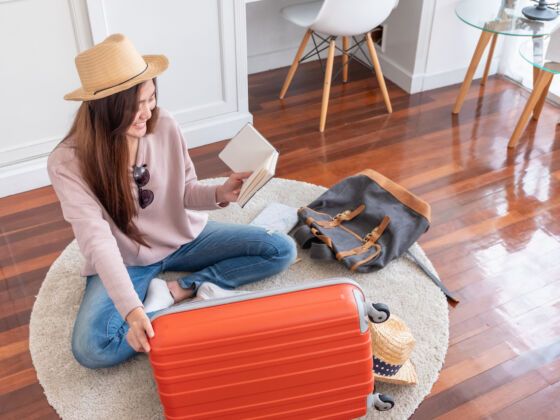
Trying to keep from packing to much while remembering essential items can be tricky. Don’t wait till the last minute for packing for your semester abroad, and keep the following in mind.

Backpack

You will be taking field trips with your class and on your own, so bring a backpack that can serve as a travel pack and/or overnight bag. Or opt for fanny packs, which are all the rage in Europe.

Clothes

Pack less than you think you need, and choose clothing that is comfortable and can mix-and-match. Pack layers so you are prepared for all types of weather.

Photo by sollang

Carry-on with change of clothes

When the airline “misplaced” my bags for two weeks, I was happy to have an extra shirt and pair of underwear.


Bathing suit

It doesn’t matter if you are landlocked or studying in Antarctica, you will need your bathing suit at some point. It takes up virtually no room.

A travel diary

Even if you don’t keep one at home, you’ll be glad to have it there. Get a nice one like a Moleskine and you will be more likely to write down your experience with the crazy waitress or the local slang you just learned.

A camera

These days, it’s not hard to find affordable, lightweight digital cameras that you can bring with you everywhere. This provides you the option to annoy family members by forcing them to sit through your explanation of hundreds of photos once you return home, or for a wider-ranging option, consider posting your photos in a travel blog.

Is it worth investing in a Digital SLR for your semester abroad? Find out here.

Photo by kratz


An Extra Duffel bag

Even if you’re not a shopper, you are bound to collect some souvenirs over a semester in a new place. If you can’t check the extra bag, you can always mail it home.

A Guidebooks and Maps

Do a little research of the place you will call home for the upcoming months. Locate places you may want to visit on your weekends, holidays and breaks.

Swiss army knife

Swiss Army knives and other multi-tools are unbelievably handy – as long they are not confiscated by a giggling TSA employee at security. Make sure they make it into your suitcase.

Important contacts/phone numbers

You program should provide you with some of these, but it’s always nice to come prepared with numbers to the embassy and local police.

Duct tape

Good for when your brand new backpack decides to give out on you while running between trains, forcing you to carry 70 lbs like a giant baby.

Money belt

These are flat pouches you can tuck under your clothing to keep you money, ID and credit cards safe from pickpockets, and they don’t take up much room in your suitcase.

A small picture album

You can purchase cheap albums at your local widget store that will hold 10 to 20 images of your family, friends, lovers, pets, etc. No matter what you think now, you will miss them, and they’re fun to share with other students and host families.

Limit the shoes!

Ladies, I know this may be hard, but if you can limit shoes to a pair of athletic, sandals, and everyday tennies, you will be much happier with the space it leaves in your suitcase. The infrequency of a formal event on a semester abroad is not worth the hassle of lugging along boots or heels.

Photo by Malik Williams

Limit the toiletries!

Don’t bring the extra bottle of lotion, toothpaste or body wash. Regardless of where you are studying, they will almost always have a store where you can purchase these items.

No to laptops!

Unless you are on a computer science study program, leave the technology at home. You will be provided with computer and Internet access through your program, and for godsakes, disconnect for a while!

Other list add-ons: book (long rides), iPod (familiar tunes), inflatable travel pillow (to arrive well-rested), international phone card (Hi mom!), tissues (double as TP), a rain slicker, scarf, sunglasses, a good hat, laundry bag, travel alarm, batteries, chargers, wallet, plane tickets, host family’s address, and a deck of cards.

Put explode-ables in plastic baggies and away from electronics, and remember not to put fluids (toothpaste included) in your carry-on. Research the area you will be staying for specific requirements, such as mosquito nets, electric plug converters, bug spray, malaria pills, sleeping bag, etc. And please, in all your sleepless college nights, try not to forget your passport.

Last but not least on the list: an open mind. You will inevitably run into customs and routines you are not familiar with, events that will frustrate you, all part of the beauty of a semester abroad, something they can’t teach you in a classroom.


    Share

About the Author

Matador ID: jennstar

Jenny Sherman grew up in the ever-changing, cultural wonderland that is the San Francisco Bay Area. Its diverse assemblage of people and lifestyles as well as long road trips in the family van inspired her initial interest in travel. Check out her blogs of her travels and current project, BioTour, at Biotour.org.

More By This Author

18 Comments... join the discussion!

  • swooziec replied on August 9, 2008

    Mostly great advice that I wish I had seen before I took a semester abroad a few years ago. Just so you know my comments are more current than that experience—I now live in Amsterdam and have a small place in Paris where I stay 7-10 days per month. I also spend as much time as possible in Italy. I owned a B&B in Amsterdam for awhile but now have a few apartments that I rent to people on holiday. 1) I disagree with the statement about fanny packs. They are not all the rage in any of these places, not with students and not with the locals. Some tourists wear fanny packs. They may be okay if you are on a hike with a group of friends but in the cities, it's a screaming statement, "STEAL FROM ME. . . PLEASE, OH PLEASE, STEAL FROM ME!" 2) Most semesters abroad take place between mid-late Sept and early-mid May, not exactly the weather for sandals. I would suggest a pair of flats such as the ballet flats or other comfortable style. Sandals will be fine in the Mediterranean until about mid October but after that you'll be stuck with your tennies and athletic shoes. There are plenty of places to buy inexpensive but comfortable shoes, especially summer shoes. And although I would not bring boots with me, Europeans LOVE boots and the shoe stores are filled with both practical and fashionable boots so you might want to consider putting aside some cash to buy them in Europe. They will fit in the duffel you bring for all the extra stuff you buy and want to take home. 3) My niece did a semester in Europe last year. Don't expect to be provided with a personal computer. There will most likely be a few computers available for ALL students to use, local and visiting. It is not as common in most of Europe for students to have their own pc or laptop at home. Competition for time can be tough. While I wouldn't bring an expensive laptop, if you can bring an inexpensive and lightweight one such as the eee pc (weighs 2 pounds) or an old one (watch the weight), you will probably be glad you did. On the other hand, a little competition never hurt anyone. If you do bring one, remember you'll need a plug adapter but you won't need a converter. 4) With or without your own laptop, bring a memory stick for your data, always remove it from the computer and keep it in a safe place. 5) Europe's budget airlines such as Ryan Air and Easy Jet –and others–are very strict about weight limitations and have lower weight limits than most US airlines. No matter what airline you choose to fly with, check for the weight restrictions on-line before you pack. 6) I never used my travel diary. Contrary to Ms; Sherman's advice I believe if you don't use one at home, it's unlikely you will use it abroad. But I do write and send postcards so instead of a diary I would occasionally send myself a postcard to my home address. In reading them upon my return, I had a picture along with my own words to remind me of what was going on at that time and place plus in most cases I had an interesting local stamp. And, no, I do not normally collect stamps. 7) Bring a couple of spare batteries but like lotions, toothpaste and shampoo, etc. they also sell them in Europe. Yes, all types, whether it be the little flat ones for a watch or the energizer bunny's AA, AAA, C or D Batteries can be heavy.

    (Report comment)

    ↵ Reply
  • zwarte piet replied on August 9, 2008

    Nice article! I would add one item: a power board. That way you can get by with fewer adapters, as you can just plug all of your chargers etc into the board which only needs one adapter. Regarding the laptop, I think it's a bit optimistic to expect adequate computer access, though I suppose it depends on your course requirements. Doing law on exchange in Holland, my laptop was essential. Also, a laptop + external hard drive is almost mandatory for anyone looking to do some serious photography while on exchange.

    (Report comment)

    ↵ Reply
  • Elizabeth replied on August 11, 2008

    bottle opener! While a swiss army knife comes in handy for this, you don't always want to be pulling a knife out in front of others when you want a drink

    (Report comment)

    ↵ Reply
  • Newmexmom replied on August 16, 2008

    One of the easiest ways to stay connected with home is via skype. Having your own laptop makes it more convenient; Also many foreign universities do not have dorms so kids end up staying with host families. Now days it isn't unusual for the families to have computers but you can't expect them to move aside when you need it for an assignment. For students traveling in the southern hemisphere (not everyone goes to Europe) sandals are a must have, too.

    (Report comment)

    ↵ Reply
  • study abroad bangkok replied on September 9, 2008

    Very helpful advice. I'm going over sea very soon

    (Report comment)

    ↵ Reply
  • Pinx replied on December 19, 2008

    Yes, I totally agree…getting your own laptop is a boon, specially on those countless nights when you want to be sitting in your bed talking to loved ones online. Ballerinas are a good bet. But if your one of those exploratory types, getting a pair of leather sneakers (not the dry-fit fabric ones) which can be sprayed on with water-proofing spray. This is a good option because most European countries tend to be a bit wet n cold.

    (Report comment)

    ↵ Reply
  • AJ replied on April 25, 2009

    Very good list, lived in germany for a year.
    However i brought my laptop and it helped me.
    It allowed me to keep up with my family at home but also allowed me to get more involved with friends in germany.

    (Report comment)

    ↵ Reply
  • Jenny replied on June 8, 2009

    alright alright it seems the laptop is essential in most cases. it wasn’t in mine but i see good points here. thanks for the helpful additions from everyone, however I still do, with every fiber of my being, encourage bringing a journal of some sort. maybe just a notebook. Even my non-writer friends found them super-useful for spontaneous notes.
    Bon Voyage!

    (Report comment)

    ↵ Reply
  • MIndy replied on December 23, 2009

    I agree with most items on the list, but I strongly disagree with not bringing your laptop. For me at least, when I studied abroad in Australia, we would have to hike a few miles uphill to the computer lab in order to get anything done (including school work). I can’t even imagine what it would have been like had I not brought my laptop with me. I used it for everything from being in touch with my family through skype, writing papers from my room, uploading pictures, and blogging. However, when I’m traveling and not on campus, I don’t bring it with me and try to stay away from the internet cafes unless I have to plan trips and book flights.

    One thing that I really regret was not keeping a journal. It might seem petty at the moment, but you’ll be glad you have a sentimental item to hold on to forever. If you’re going to blog on cyber space, make sure you’re detailed on consistent.

    (Report comment)

    ↵ Reply
  • Yonatan replied on December 24, 2009

    For Japan, I would skip the backpack altogether and instead buy a cheap but nice looking overnight shoulder bag once you arrive. Since Japanese people don’t use backpacks for anything but mountain climbing (even students only carry messenger bags), it looks weird and gets in the way on packed trains, tiny restaurants, and G-d forbid if you try entering a narrowly-lined store aisle with one. In Japan, small and compact is king.

    Also, be aware that Japanese people (same goes for Korea for that matter) tend to dress very nicely, so if you are relatively short, try shopping for clothing over here. If you are 5′ 9″ or taller, you may have to bring your own clothing from home depending on your sizes, but remember not to dress like you are on a jungle adventure. A baggy t-shirt and old jeans will make you feel like you wore a sweat-suit to a tuxedo party after seeing almost everyone else dressed in slacks, skirts, etc. If you do bring jeans from home, they should be in good shape and a little on the trendy-side. And make sure your shoes can be taken off and put back on in only a handful of seconds- it’s awkward to have to sit down on the floor in the middle of a restaurant to unlace your hiking boots when everyone’s trying to step around you or impatiently waiting for you to get out of their way.

    All of this seems materialistic and fashion-heavy, but it’s really just a simple matter of Japan being a very presentation-conscious society. Taxi drivers wear immaculate uniforms, simple cheap gifts are wrapped to look as if they contain treasures, and your personal appearance is judged to be an indicator of your personality and attitude towards other people, your job, etc. Even if you dress very simply, keep it clean and sharp.

    (Report comment)

    ↵ Reply
  • Kimberly replied on May 31, 2010

    Make sure you have a ready form of communication avaiable at all times – you are going to need to keep in touch while you are studying. From personal experience, calling cards can be sometimes hard to find and most cases, very expensive and limited. If you are thinking about taking your cell phone, I would advise investing in a low cost prepaid one – Net10 is a great example since they also offer an international calling plan with no additional contract. Their calls are .15 a minute to over 50 countries and many of them are in Europe – they also have great plans specific to Mexico and Canada if you have a lot of friends and family there. Best of all, Net0 is prepaid so they are a prefect company to have over the summer and you have no commitment to stay – and the phones start as low as $19. Take it from me, staying in touch is a must and Net10 will save you loads.

    (Report comment)

    ↵ Reply
  • Rosie replied on July 18, 2010

    As someone who’s going abroad this coming fall, I found this article incredibly informative and helpful. One thing I disagree with however, is the suggestion to leave the computer behind. The university I’ll be studying at does not provide students, study abroad or otherwise, with personal computers meaning that without my personal laptop I would be forced to compete for a computer in the library… not exactly something I want to experience especially during end of term crunch time.

    (Report comment)

    ↵ Reply
  • Michelle replied on July 24, 2010

    I did a semester abroad for Spring ‘10- I definitely wouldn’t recommend leaving the laptop behind! Laptops can be a hassle to lug around, and of course you don’t want to spend hours a day on the computer when you’re abroad, but it’s necessary to have, especially if you’re a student. If you have the $300 to spare, get a netbook for travel! It’s perfect for toting around, I basically just used it for internet, writing papers, and uploading photos. Also, if anything were to happen to it, losing a cheaper computer is better than losing a Mac or something. They also only weigh 2-3 lbs which is nice when you have to follow weight regulations on European airlines. I’ve seen both Ryanair and EasyJet deny boarding to people who were over the weight limit with their luggage.

    (Report comment)

    ↵ Reply
  • nik replied on July 26, 2010

    Oh wow! Useful advice. Although I’m still in secondary school and have not learned the joys of traveling I’ll keep this in mind (although I will also heed the advice from other’s comments) if I ever go abroad! :D

    (Report comment)

    ↵ Reply
  • yourstudyabroad blog replied on August 10, 2010

    Hi there,
    Wow it is a nice page and even better post! Enjoyed reading it, might quote some in my blog too (with reference of course). Keep up the good work!

    (Report comment)

    ↵ Reply
  • jjj replied on August 13, 2010

    Yeah I thought leaving your laptop is a bit silly. As everyone has noted, there’s so many versatile uses for it! But a notebook is great to put in a purse. The map you can download from the embassy or the airport will probably be the most up to date. Also I do not like nature, I don’t hike or camp- so anything pertaining to that won’t be necessary.

    I’ll be heading to japan this fall ‘10 and I thought my backpack would make a great carry on as it can be squished down or popped open while still stylish ;D. However buying shoes and clothes there isn’t that practical at least for me since I’m 5′6 and wear a size 10 shoe. Uh there will be no shoe buying for me!!! That just means I’ll limit a lot of other superfluous items (jewelry, sweaters, purses, etc) in my suitcase while focusing on items I know I can’t buy there like shoes, perm, certain lotions for my delicate skin, W30L29 jeans…

    As for researching the place, I don’t think one should research too heavily but instead look forward to what your fellow students will draw you towards. I find tourist traps are typically just that- tourist traps. How great is it when a friend brings you somewhere noone else knows or you wander into a strange but oddly perfect situation? Definitely check out dangerous areas to avoid instead.

    (Report comment)

    ↵ Reply
  • Suzy replied on August 15, 2010

    One thing you should never forget when going camping is the camera as it is said here. It will only be the evidence of your greatest adventures someday and it will be a proof that the world is the greatest place to live in. :) Hope you guys agree with that!

    (Report comment)

    ↵ Reply

Leave a Comment

Get Matador in your inbox and around the web.

Sign up for our FREE weekly newsletter.


View full list of RSS feeds

Jump To Category:


Explore the Community


Popular Stories on Matador

Guide to Kenya's National Parks

From the reaching equatorial glaciers on Mt. Kenya to p... 

MatadorTV vlog 8

Live from the Pike Place Market in downtown Seattle.... 

New Dating Website Helps Decide If You're Beautiful

Want to be beautiful and fall in love with other beauti... 

Family vs. Travel: The Regret of the Road Not Taken

We all make choices when traveling. Often, choosing one... 

Photo Essay: Wreck Diving in the Great Lakes

Diving in the Midwest isn’t as glamorous as diving in... 

Witnessing The Divine In The Darkness

From the Yogis to the Romantics, many have sought to li... 

Travel Photographer Interviews - Mathieu Young

Matador Editor at Large Paul Sullivan talks with Mathei... 

Buenos Aires Binge Eating 101

We gave Tom Gates 24 hours to eat as much as he could s... 

How Climbers Can Help Pakistan Rebuild

A senior official at the Red Cross has said that rebuil... 

How to Get Tubed in Tarp [Video]

When searching for some hollow waves, young Orange Coun... 


Focus


Editor Blogs