Photo: Jorge Santiago
There’s a lot of griping in travel about a golden age when guidebooks and backpackers didn’t give you the full picture of some middle-of-nowhere off-the-beaten-track town and you got there shimmering with innocence, sleeping on the floor of a poor local’s house, getting fed plates of food unsullied by foreign tastes, possibly being ripped off or wandering cluelessly for a few hours, the town to yourself, not a shred of info or a single other tourist to de-authenticize your experience. Ah, the good old days.
But now, of course, one devastating little word or two on Google opens the Pandora’s Box of travel, and you’re no longer the Only One, no longer pure. You find out not only have so many other people been there, but they’ve written so much about it that before you even set foot on your journey your head is crammed full of expectations and preconceived notions about everything from cafés to the local language to the right bus to take where.

The question is: is this a bad thing? Andy at 501 places does a good job of feeling out the ups and downs of this outpouring of (nearly unavoidable) travel knowledge. On the one hand, it’s nice to know what hotel is an overpriced, falling-down brothel; on the other hand, the meticulous research and googling that reveals every detail about lodging options obviously does away with the unexpected – out of which, arguably, some of the most interesting travel stories and insights emerge.
So on the one hand, sure, I’d like to know how to take the bus in Buenos Aires and how to survive a Chinese banquet; on the other hand, some of the greatest experiences I’ve had on the road have come from total ignorance, and the often slapstick, sometimes poignant efforts to learn and navigate a place from the bottom up.
I remember crossing Borneo by bus – that was the first time I had ever traveled without a Lonely Planet, which in retrospect, is fairly amazing. Four years of living, traveling, and working abroad, and I’d always had a Lonely Planet. Many travelers, including myself, come to take that particular book – or other substitutes – so much for granted that traveling without a guidebook feels like walking around naked, exposed, for a little while.

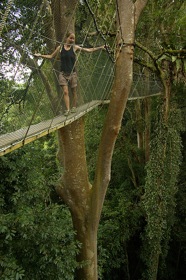
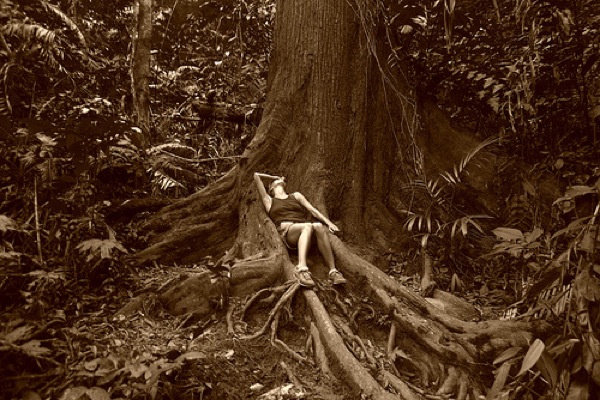
But in Borneo it was incredibly satisfying – it forced us to get on the ground knowledge everywhere we went, to piece things together on our way, to pay close attention to things we might otherwise have taken for granted. It ultimately took us to a middle of nowhere jungle town, where the only ways out were a forgotten Brunein border post (where we had to battle for hours for a visa for my Mexican husband) or weeks of jungle trekking.
That – meeting the Indonesian mafia, seeing the Brunein officials who cross the border into Sarawak to get wasted on weekends, exploring the strange distorted jungle underbelly of a Borneo that otherwise sells itself as an exotic paradise – was unpredictable and straight-up educational, because we went into it with zero expectations whatsoever.
At the same time, we could’ve very simply have gotten lucky, and we might’ve missed out on all of those experiences by taking one random turnoff. The payoff of maintaining a blank slate of expectations is that every place you reach is felt and absorbed on a different, deeper level since you haven’t been primed for it. The downside of this blank slate is that sometimes it hides places and information that could actually make a trip much richer and fuller.
Maybe your asking around or your luck leads you somewhere remarkable other tourists would or wouldn’t discover; but maybe it leads you randomly here and there, on cow paths that bypass some truly phenomenal places. I suppose it all depends on how you like to travel, how much time you have, how you balance out the experience of the journey with the need to find and see something in particular.
What do you think, readers? I’d love to hear with the Matador community has to say about this. Do you feel the Internet has enriched your travel experiences or somehow simplified them? Do you travel with guidebooks? How much research do you do? Please share your comments below.
About the Author
Related Posts
7 Comments... join the discussion!
-
-
I’ve traveled with crappy guide books and backpacker word-of-mouth since the late 70’s. For the last couple trips recently, I did a lot of Internet scouring before hitting the road. But after a while I was getting a been-there-done-that feeling before I’d even gone. Just too much info, so I stopped a few weeks before departing.
↵ -
There are many places no one goes to and no one has written about and you can’t do a google search and pull up anything. Most towns have some sort of method for when strangers come, someone who rents rooms or more often the headman’s house. I usually bring a map. There’s a whole world out there. Picking up the most spoken local language is a big plus.
↵ -
While I agree with you that some of the “chance” that comes with travel has been taken away with the advent of the Internet, I think it’s also opened up the doors to things we wouldn’t normally know about. Without having the opportunity to chat with locals and people who have experienced these hidden locations, I would never know about some of the places I have traveled and would like to travel some day. I would never have met people who are doing things to keep travel an authentic experience (I wonder if those people would even being doing this if the Internet didn’t exist).
Also, we run the chance of overrunning some otherwise off-the-beaten track places, but we also give other places the opportunity to thrive. There are many places that are being loved to death, but others have been brought to the forefront of conversation in a positive light (or at least in a way that allows a dialogue to be started, whether that conversation is positive or negative).
↵ -
This is an interesting read as I have just set up a travel company in Sydney where we provide personal itineraries for travelers to Sydney & NSW. I have done a fair bit of traveling myself over the years, and have used a Lonely Planet guide plus utilised some invaluable information gained from locals where possible. I agree that some of my best experiences have been the ones off “the beaten track”. I am not a big fan of tourist destinations and following the crowds, although in Sydney you have to see the Opera House and Sydney Harbour Bridge…both are a must see for sure!
After living in Sydney for 3 years, I have discovered so much about this beautiful city and there is definitely more to see than just a city and Eastern suburbs. Without knowing a local, many people miss out on some great things to do in and around Sydney & NSW. My boyfriend and I have had many adventures on our weekends and have written entries about these on our blog site. Without the internet people would not be able to see these and ask our advice. I definitely feel that the internet has helped to open up a whole new world!!
↵ -
I think the internet is most valuable as a tool to encourage and show that it can be done. I am certain that by seeing other people there before me, it encourages me to go that extra step and see something I never before thought was possible.
When I go out, I have one lonely planet to show me around. That covers the basics and the rest I “discover” on my own. Its the best of both, for me at least. Otherwise, you get information overload.
↵ -
The beauty about the internet is that people have the choice to use it. It is there for travelers to utilize, but it is also there for them to ignore.
I have been to 14 countries and I have only used a travel book once. I found that it took away from my experience as a foreigner.
I am also the type of person that will forget everything if my day is planned out, even if its by the internet or a travel guide.
My most memorable experiences come from walking into a country with no plan. This is not to say that I was ignorant of the country. I think every traveler is entitled to learn about the country he or she is about to explore, but I don’t believe in using a cheat sheet to get the best deals/experience.
Even bad experiences are looked back upon fondly.
↵