Korean culture has survived for 5,000 years, despite the best efforts by hostile neighbors to stomp it out. If you know and respect Korean culture you will get much more out of your time in Korea.
1. KIMCHI IS CULTURE!
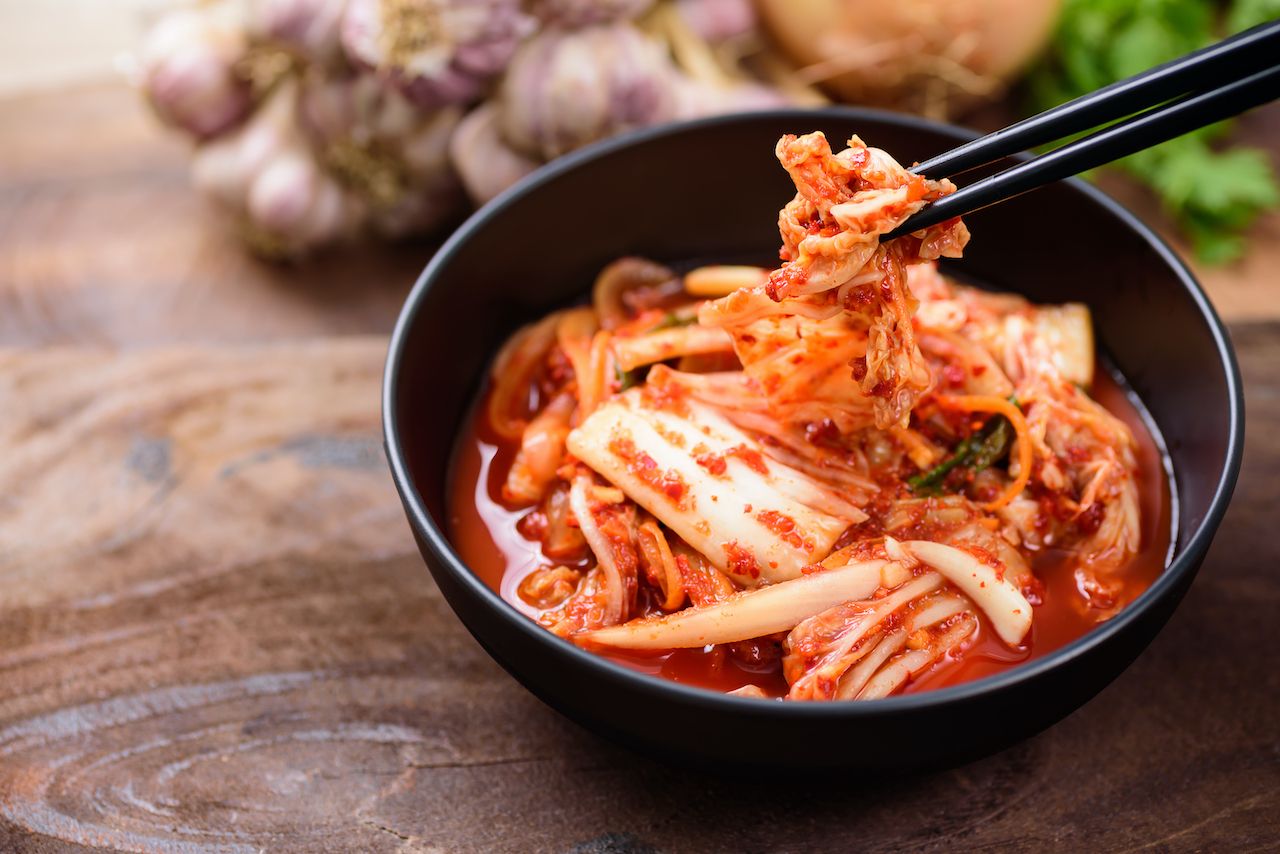
Photo: Nagyman
Kimchi is sliced cabbage, fermented with red chili sauce and anchovy paste. It is pungent, spicy, and sour. Koreans love it and eat it with every meal – usually on the side – though they also use it as an ingredient in countless other dishes.
Kimchi is symbolic of Korean culture: it’s strong, distinctive, and defiant. Some foreigners can’t stomach it, but if you can, you will earn the locals’ heartfelt respect.
2. SHOES OFF!
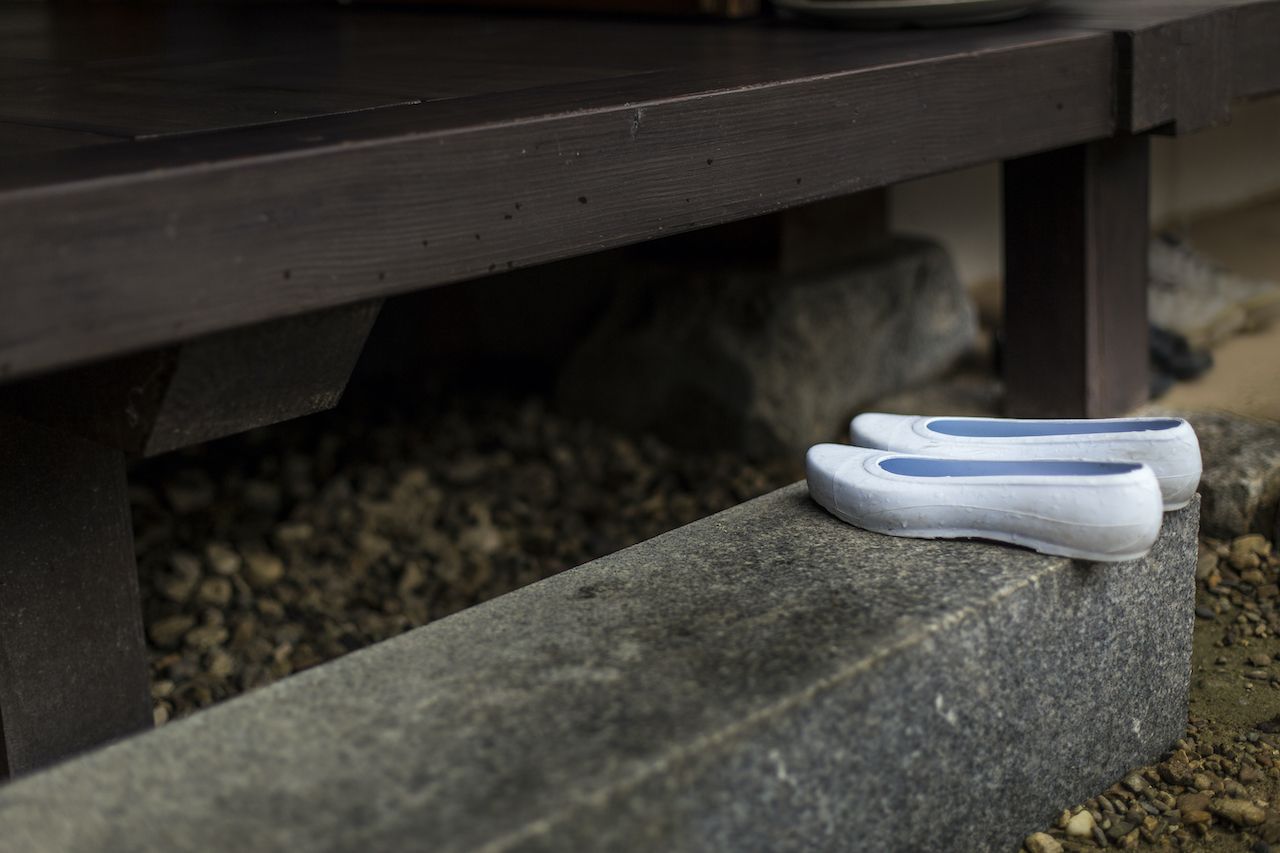
When entering a Korean home, you must remove your shoes. To do any less is a sign of great disrespect.
Photo: ilya_ktsn
Koreans have a special relationship with their floor, on which they sit and often sleep. A dirty floor is intolerable in a Korean home, and they view Westerners as backward savages for remaining shod in our living rooms.
3. SOJU!
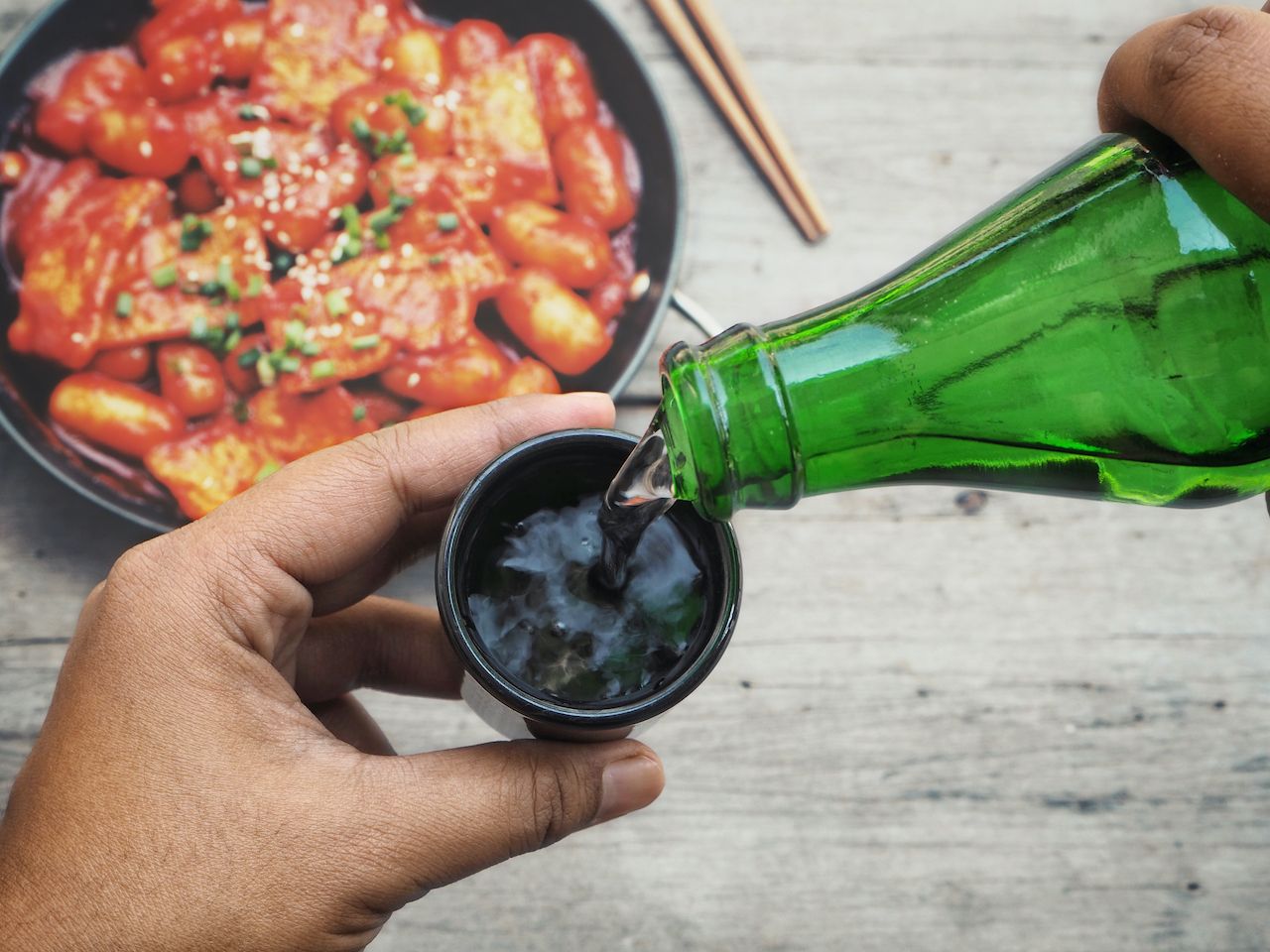
Korea is a drinking culture, and their national booze is soju, a clear, vodka-like drink.
Photo: rtclauss
Soju is drunk out of shot glasses, and like all liquor in Korea, it’s always served with food. Koreans drink in boisterous groups, regularly clinking glasses, while shouting geonbae! (cheers) and one shot-uh!
At night you will see men coming out of norae bang (karaoke rooms) and staggering through the streets, laughing, singing and arguing. Just be sure to avoid the puddles of reddish-vomit often left behind, which are also known as kimchi flowers.
Koreans have strict drinking etiquette: never pour your own drink, and when pouring for someone older than you, put one hand to your heart or your pouring arm as a sign of respect.
4. RICE!
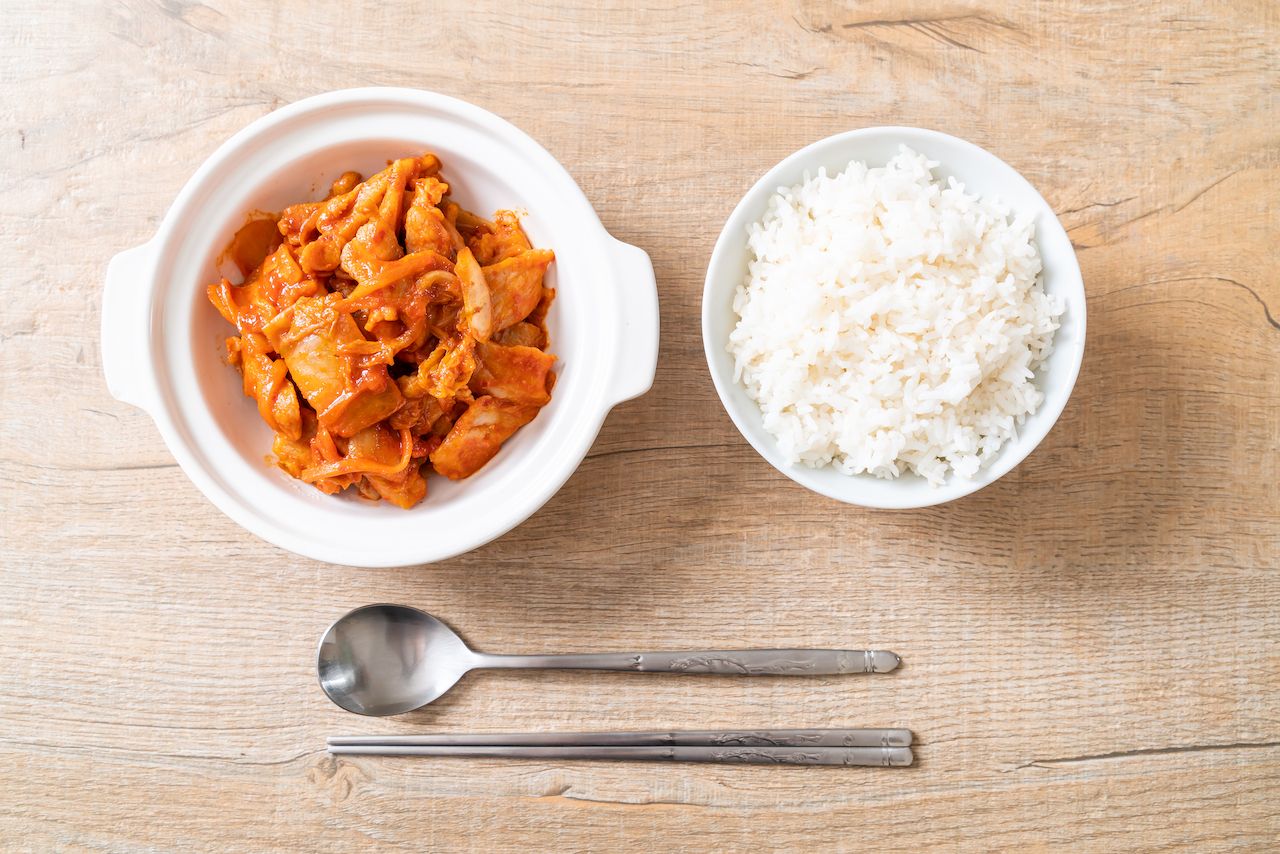
Like the Japanese, the Koreans eat rice with almost every meal. It’s so ingrained in their culture that one of their most common greetings is Bap meogeosseoyo?, or ‘Have you eaten rice?”
Unlike the Japanese, Koreans usually eat their rice with a spoon, and they never raise the rice bowl off of the table towards their mouths.
Also, chopsticks must never be left sticking out of the rice bowl, as this resembles the way rice is offered to the dead.
5. DO NOT SMILE!
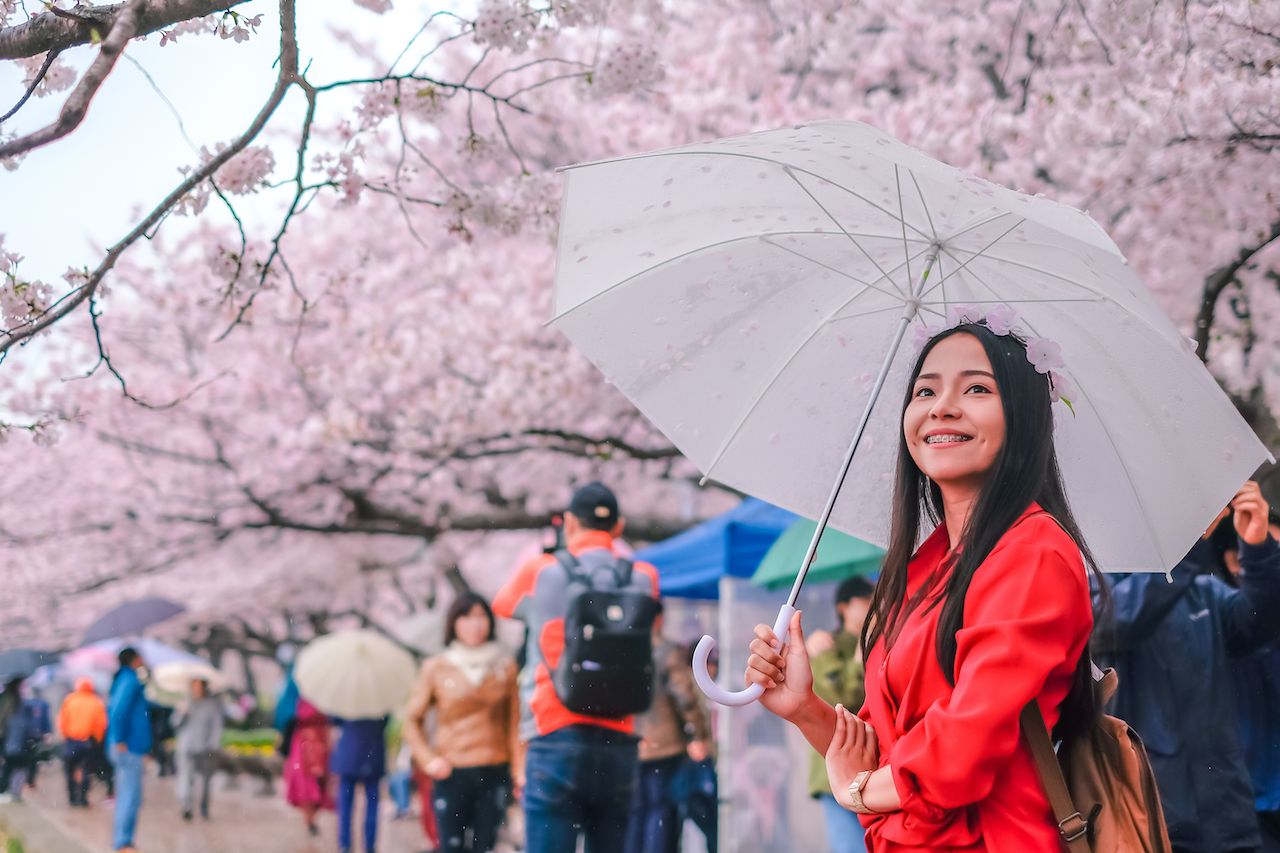
Koreans are a warm and generous people, but you would never know it from the sourpusses they paste on in public.
Photo: aplomb
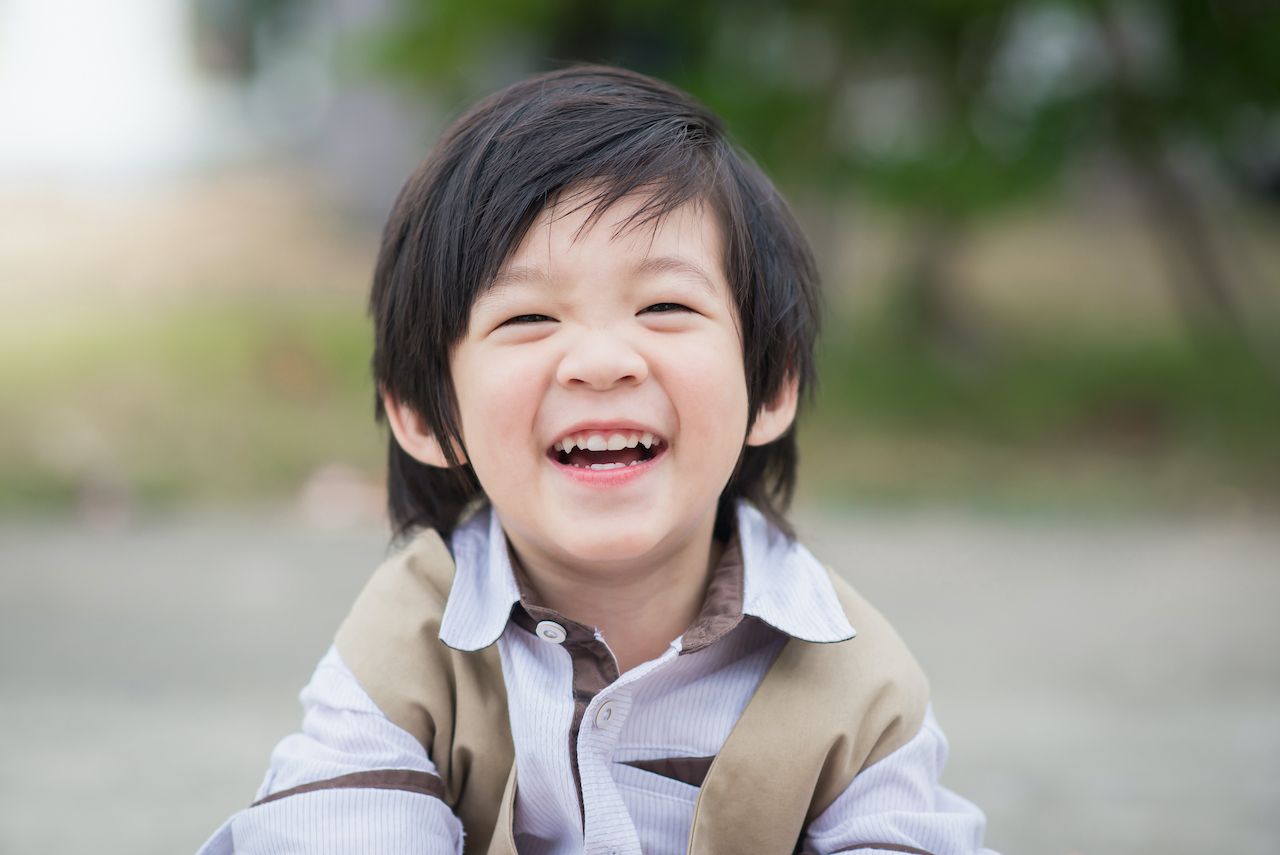
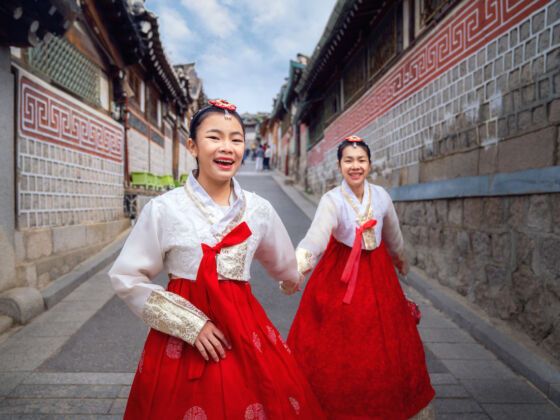
Sometimes, the chaotic streets of the peninsula resemble a sea of scowls, with everyone literally putting their most stern faces forward. This is NOT true of the children however, who will invariably grin and laugh while shouting “Hello! Hello!”
6. BEWARE OF ELBOWS!
Korea is a crowded country. It’s a cluster of stony mountains with only a few valleys and plains on which to build.
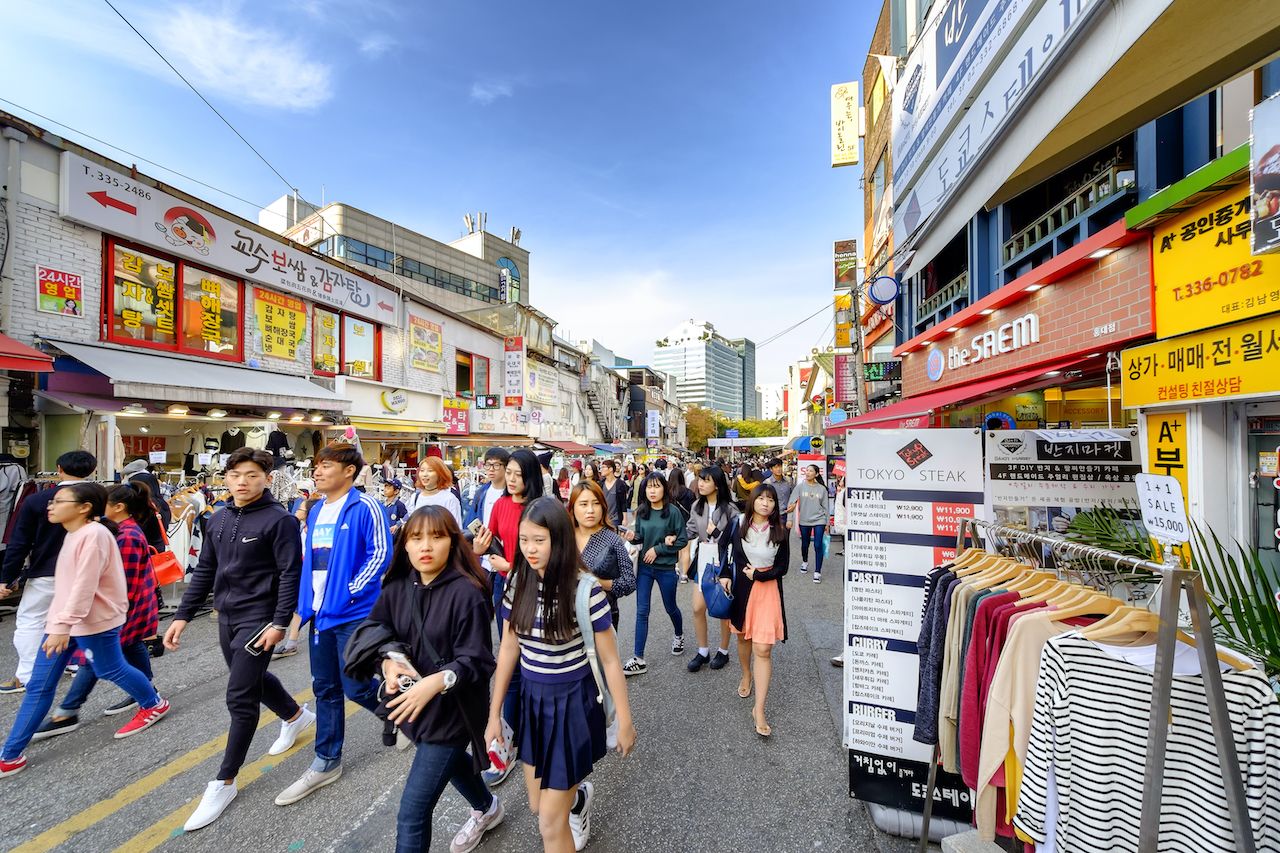
The result is a lot of people in small spaces, and folks will not think twice about pushing and jostling in order to get onto a bus, into an elevator, or to those perfect onions at the market.
Don’t even bother with “excuse me,” and beware of the older women, known as ajumma. They’re deadly.
7. PROTESTS!
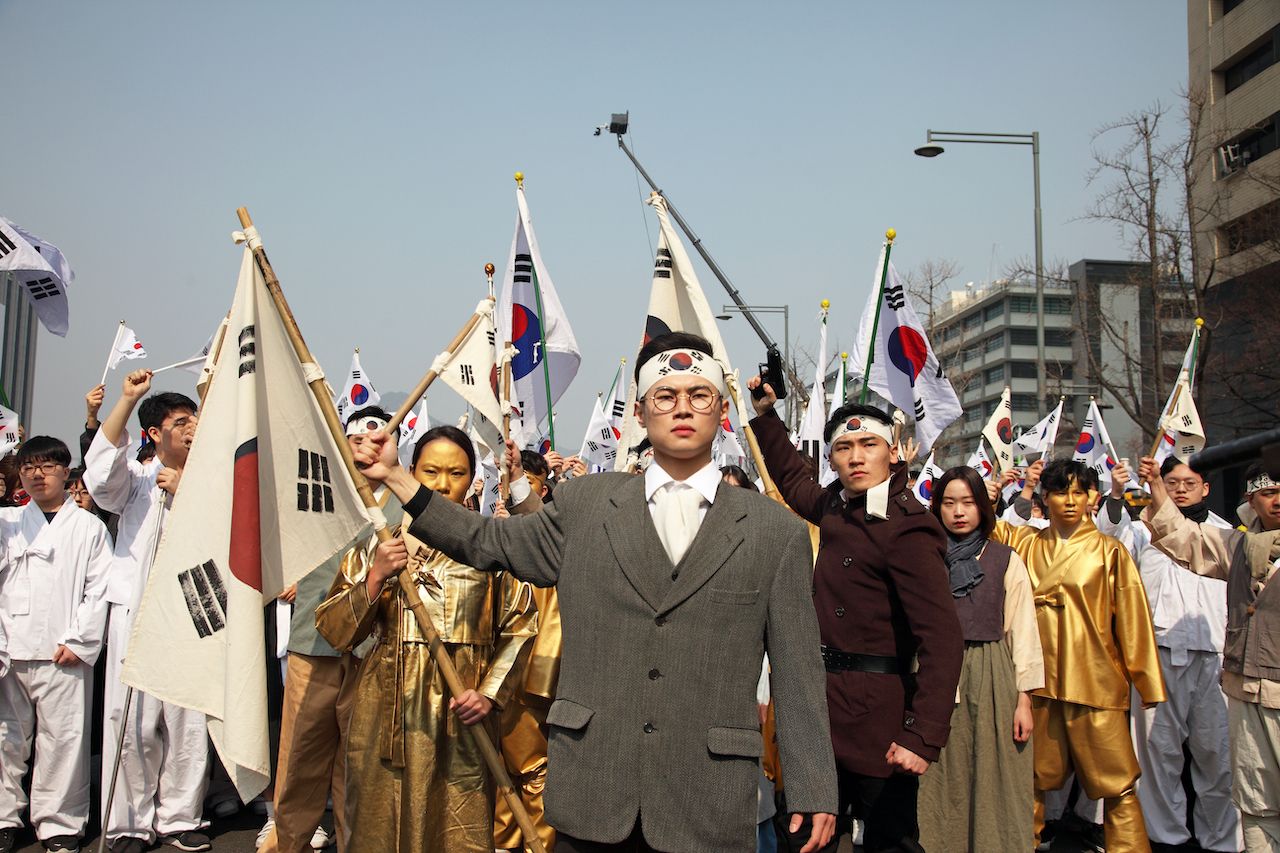
South Koreans fought hard to achieve the democratic society they now enjoy, and are among the top in the world when it comes to exercising their right to protest.
Dissent is alive and well. Koreans protest with frequency and they protest with fervor – on all sides of the political spectrum.
Photo: rabble
Protesters employ a variety of methods, from the violent (angry students regularly attack riot police with huge metal rods), to the absurd (cutting off fingers, throwing animal dung, covering themselves in bees).
8. HIKING!
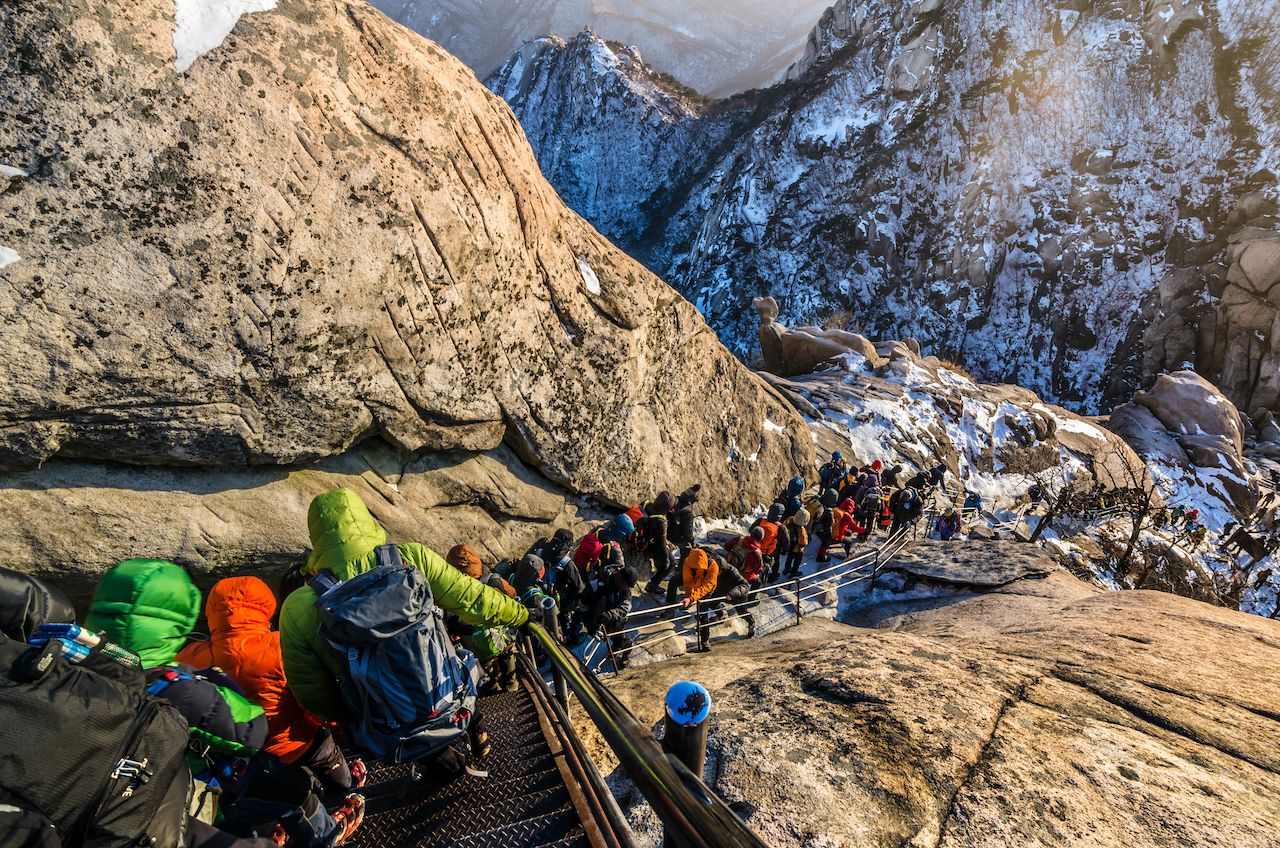
As Korea is mountainous, it should come as no surprise that hiking is the national pastime.
Even the most crowded of cities have mountains that offer a relative haven from the kinetic madness of the streets below.
Photo: xiaojiecha
Koreans are at their best on the mountain. They smile and greet you and will often insist on sharing their food and drink. Make sure to stop at a mountain hut restaurant for pajeon (fritter) and dong dong ju (rice wine).
9. BOW-WOW!
Yes, some Koreans do eat dog meat, despite some sporadic attempts by the government to shut down the boshingtang (dog meat soup) restaurants, in order to improve the country’s “international image.”
Dog meat is mainly consumed during the summer and by men, who claim that it does wonders for stamina.
10. NATIONALISM!
Koreans are an extremely proud people, and sometimes this pride transforms into white-hot nationalism.
You see this nationalism displayed at sporting events, where thousands of Korean fans cheer their national teams on in unison, banging on drums and waving massive flags.
This nationalism especially comes to a boil whenever Japan is mentioned, as Japan has invaded them several times, and occupied Korea as a colony for almost the first half of the 20th century, decimating the country’s resources and conscripting thousands of their women as sex slaves.
Finally, please remember the two following things:
To a Korean, there is no such thing as The Sea of Japan. The body of water between Korea and Japan is known only as the East Sea.
Also, Koreans fervently believe that Dokdo – the disputed islets between Korea and Japan (known in Japan as Takeshima) – belong only to Korea.
It would be most unwise to attempt to disagree with either of these points, as Koreans don’t consider them up for debate.
COMMUNITY CONNECTION!
Who the heck wrote this piece? Check out a profile of the author:
Introducing: An Olympian Travel Writer In South Korea
For the lowdown on finding work in Korea, read How To Get A Job Teaching In South Korea.
About the Author
Related Posts
25 Comments... join the discussion!
-
-
Great roundup Chris! Your bit on protests sounds wild. Robin wrote a piece last year on surviving the beef riots
http://www.bravenewtraveler.com/2008/07/24/surviving-the-beef-riots-in-south-korea/
↵ -
Very interesting read! I would love to visit Korea – I’ll keep this page bookmarked!
As a side note, it should be so in all cultures that you remove your shoes in another person’s house. It shocks me that people will come in and walk around with their shoes on. At the very least, ask!
↵ -
Yeah, the shoes off thing is hardly unique to Korea, but some Westerners must be reminded of it.
↵ -
Don’r forget! When someone sneezes, don’t say “Bless You” you should just turn away and pretend nothing happened. Haha old ladies are deadly xD
↵ -
Man, I’m Canadian and the idea of wearing shoes into someone’s house without permission is just horrifying to me. XD
↵ -
Nice information chris ! especially about the deadly old ladies

I would say that keeping shoes outside is a great custom they have.↵ -
Hey Chris. Nice article. Here’s just a small tip for any newcomers to Korea. Bap is the word for rice, but is also commonly used as a general word for food or a meal. If some asks you, “Bap meogeosseoyo?”, they’re not asking if you’ve eaten rice that day. They’re simply asking if you’ve eaten. This is the case because food is such a big part of the culture.
So if someone asks you that question, and you HAVEN’T had rice that day but HAVE had a meal, make sure you answer yes. Otherwise, you may find yourself joining a group for another meal. And if you’re at a group meal, Koreans don’t like it if you’re not eating.
I really enjoyed the column!
↵ -
Yeah, I know that they’re not specifically asking if you’ve eaten rice, but it’s telling how important rice is to their culture that it is basically another word for food.
↵ -
Also, “Bap meogeosseoyo?” is more an inquiry into your well-being than a literal concern with whether you’ve eaten or not. As we can imagine, it comes from leaner days, when asking if you’ve eaten was the same to asking if you are well.
When I first moved here and spoke no Korean, I would often get Koreans asking me if I’d eaten in English (they obviously translated it themselves). I always expected a dinner invitation to follow (often not wanting one), since in America, “Have you eaten?” is almost always the lead-in question to an invitation.
Fascintating stuff, anyway. Thanks for reading and commenting, Aaron. Are you living in Korea?
↵ -
Chris,
I am in Incheon, South Korea right now. I’ve been here for 9 months. I always enjoy finding new tidbits of information on the country.↵ -
Chris! Where were you about 9 months ago? No worries… great article I wish I had the heads up before jumping both feet into this interesting and wonderful place. Might I add, even with the swine flu concerns, don’t be surprised if find yourself party to the unwanted end of a hacking cough. Again… just take it in stride (or grin and bear it).
Viva ajumma!↵ -
Great list, Chris. I think your point about Dokdo and the East Sea not being up for debate could be applied to many of these items. Koreans feel such a strong sense of national pride that they’ll fiercely defend almost anything Korean.
I love kimchi. I couldn’t imagine eating a Korean meal without it. Technically, though, kimchi refers to any fermented spiced vegetable – not just cabbage. I’ve heard that the Kimchi Field Museum in Seoul has over 80 varieties on display.
Gotta say – I think ajummas deserve their own category! They are a culture unto themselves, with their giant sparkly visors, face masks, and tight perms. And, of course, their sharpened elbows.
Thanks for the Korea highlight. How long have you been in Busan? I’m just up the road here in Pohang.
↵ -
Pohang? I was recently up there on a motorcycle trip. There’s some serious industry going on up there.
↵ -
I have traveled extensively across Asia with 35 trips to Japan and lived 9 years in Southeast Asia, a repeat offender of sorts. Stereotypically speaking, Korea is the only country in Asia I dislike. Regrettably, I finds this as a reflection of the people, admittedly this is a narrow minded view, but unfortunately it mirrors my experiences.
↵ -
I enjoy living in Korea, but I can understand why it isn’t among the favorites in Asia for a lot of people. The place does lack the charm that you can find in other countries – especially SE Asia. It’s crowded and developed with shockingly awful architecture. And the people can be brusk and even xenophobic at times, along with being incredibly naive about foreigners and foreign perceptions of Korea. A lot of Koreans think anything Korean is always the best, and they often harp on about this, which can be grating, needless to say.
That said, they’re generally a warm and welcoming people, but given their history of being shat on by stronger neighbors, they can be bristly, to say the least. There’s none of the laid back all smiles attitude that you find in Thailand. And while the Korean landscape can be beautiful, it lacks the jaw-dropping splendor to be found in other parts of Asia.
The best thing about Korea is the food and drinking culture, which is rich, delicious, and fun. There are more restaurants and drinking joints here than I’ve seen anywhere. The city I live in is stuffed with tens of thousands of restaurants. Everywere you look someones sitting and eating or drinking – or more likely doing both. Koreans are hearty eaters and love nothing more than to share in a meal or a bottle.
I chose to come to Korea because I was offered a decent job here. I came and immediately dug it and have established a nice life here. It’s worked well for here, but I know my share of people who’ve come here and hated it. It’s not the easiest place to live as a foreigner.
↵ -
Wan,
I feel like you missed an opportunity. I found Koreans to be very kind, helpful, and I made many friends in Korea. The Ahjimas in the outdoor markets were delightful. Sometimes one needs to look beyond the stoicism to experpience the people.↵ -
Good one Chris, thanks. Kim chi looks yum. I was in an international high school here in India and had many Korean classmates. I agree about the nationalism part, but I guess you can say that about most places, isn’t it?
↵ -
Kimchi flowers….ew! That’s exactly right!
↵ -
Enjoyed the article much. Spent part of a very belated & glorious honeymoon in Korea last spring, loved every single second of it & can’t WAIT to go back! Gimmie Summer Kimchi 3X day + Soju & Makgoli in those little wooden bowls!!
I put on 25 lbs but it was worth it!
↵ -
You left out one very serious “don’t”: don’t ever play “got your nose” with those smiling children. The thumb between the index and ring finger of a fisted hand is considered very vulger and very insulting. Also, there are a several public dont’s for women, such as smoking in public, you could get fined.
Whatever you do, don’t miss a chance to climb a mountain and visit a monostary; don’t shy away from trying as much of the food as you can. You’ll be suprised about what you might love! Bebembop was my favorite, absolutely. The food in the little restaurants you might be inclined to shy away from is fantastic.↵ -
I would agree with Koreans coming across very self absorbed and quick to be rude in even the most ordinary situations.
My personal experience spanned two trips that I made down there. The incidents involving Tourism guides, drivers and even front desk left me with the sense that Koreans in general are on the edge – not quite sure why?
↵